Tuesday, June 30, 2009

The Real Struggle in Iran

By George Friedman

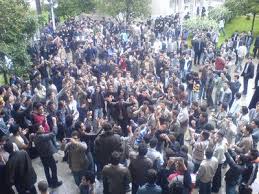
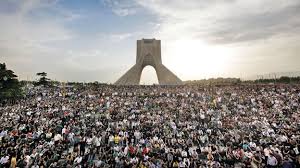
Speaking of the situation in Iran, U.S. President Barack Obama said June 26, “We don’t yet know how any potential dialogue will have been affected until we see what has happened inside of Iran.” On the surface that is a strange statement, since we know that with minor exceptions, the demonstrations in Tehran lost steam after Iranian Supreme Leader Ayatollah Ali Khamenei called for them to endand security forces asserted themselves. By the conventional wisdom, events in Iran represent an oppressive regime crushing a popular rising. If so, it is odd that the U.S. president would raise the question of what has happened in Iran.

In reality, Obama’s point is well taken. This is because the real struggle in Iran has not yet been settled, nor was it ever about the liberalization of the regime. Rather, it has been about the role of the clergy — particularly the old-guard clergy — in Iranian life, and the future of particular personalities among this clergy.

Ahmadinejad Against the Clerical Elite

Iranian President Mahmoud Ahmadinejad ran his re-election campaign against the old clerical elite, charging them with corruption, luxurious living and running the state for their own benefit rather than that of the people. He particularly targeted Ali Akbar Hashemi Rafsanjani, an extremely senior leader, and his family. Indeed, during the demonstrations, Rafsanjani’s daughter and four other relatives were arrested, held and then released a day later.

Rafsanjani represents the class of clergy that came to power in 1979. He served as president from 1989-1997, but Ahmadinejad defeated him in 2005. Rafsanjani carries enormous clout within the system as head of the regime’s two most powerful institutions — the Expediency Council, which arbitrates between the Guardian Council and parliament, and the Assembly of Experts, whose powers include oversight of the supreme leader. Forbes has called him one of the wealthiest men in the world. Rafsanjani, in other words, remains at the heart of the post-1979 Iranian establishment.

Ahmadinejad expressly ran his recent presidential campaign against Rafsanjani, using the latter’s family’s vast wealth to discredit Rafsanjani along with many of the senior clerics who dominate the Iranian political scene. It was not the regime as such that he opposed, but the individuals who currently dominate it. Ahmadinejad wants to retain the regime, but he wants to repopulate the leadership councils with clerics who share his populist values and want to revive the ascetic foundations of the regime. The Iranian president constantly contrasts his own modest lifestyle with the opulence of the current religious leadership.

Recognizing the threat Ahmadinejad represented to him personally and to the clerical class he belongs to, Rafsanjani fired back at Ahmadinejad, accusing him of having wrecked the economy. At his side were other powerful members of the regime, including Majlis Speaker Ali Larijani, who has made no secret of his antipathy toward Ahmadinejad and whose family links to the Shiite holy city of Qom give him substantial leverage. The underlying issue was about the kind of people who ought to be leading the clerical establishment. The battlefield was economic: Ahmadinejad’s charges of financial corruption versus charges of economic mismanagement leveled by Rafsanjani and others.

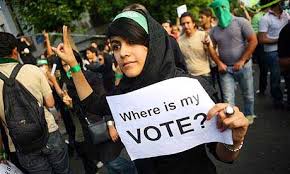
When Ahmadinejad defeated Mir Hossein Mousavi on the night of the election, the clerical elite saw themselves in serious danger. The margin of victory Ahmadinejad claimed might have given him the political clout to challenge their position. Mousavi immediately claimed fraud, and Rafsanjani backed him up. Whatever the motives of those in the streets, the real action was a knife fight between Ahmadinejad and Rafsanjani. By the end of the week, Khamenei decided to end the situation. In essence, he tried to hold things together by ordering the demonstrations to halt while throwing a bone to Rafsanjani and Mousavi by extending a probe into the election irregularities and postponing a partial recount by five days.

The Struggle Within the Regime

The key to understanding the situation in Iran is realizing that the past weeks have seen not an uprising against the regime, but a struggle within the regime. Ahmadinejad is not part of the establishment, but rather has been struggling against it, accusing it of having betrayed the principles of the Islamic Revolution. The post-election unrest in Iran therefore was not a matter of a repressive regime suppressing liberals (as in Prague in 1989), but a struggle between two Islamist factions that are each committed to the regime, but opposed to each other.

The demonstrators certainly included Western-style liberalizing elements, but they also included adherents of senior clerics who wanted to block Ahmadinejad’s re-election. And while Ahmadinejad undoubtedly committed electoral fraud to bulk up his numbers, his ability to commit unlimited fraud was blocked, because very powerful people looking for a chance to bring him down were arrayed against him.

The situation is even more complex because it is not simply a fight between Ahmadinejad and the clerics, but also a fight among the clerical elite regarding perks and privileges — and Ahmadinejad is himself being used within this infighting. The Iranian president’s populism suits the interests of clerics who oppose Rafsanjani; Ahmadinejad is their battering ram. But as Ahmadinejad increases his power, he could turn on his patrons very quickly. In short, the political situation in Iran is extremely volatile, just not for the reason that the media portrayed.

Rafsanjani is an extraordinarily powerful figure in the establishment who clearly sees Ahmadinejad and his faction as a mortal threat. Ahmadinejad’s ability to survive the unified opposition of the clergy, election or not, is not at all certain. But the problem is that there is no unified clergy. The supreme leader is clearly trying to find a new political balance while making it clear that public unrest will not be tolerated. Removing “public unrest” (i.e., demonstrations) from the tool kits of both sides may take away one of Rafsanjani’s more effective tools. But ultimately, it actually could benefit him. Should the internal politics move against the Iranian president, it would be Ahmadinejad — who has a substantial public following — who would not be able to have his supporters take to the streets.

The View From the West

The question for the rest of the world is simple: Does it matter who wins this fight? We would argue that the policy differences between Ahmadinejad and Rafsanjani are minimal and probably would not affect Iran’s foreign relations. This fight simply isn’t about foreign policy.

Rafsanjani has frequently been held up in the West as a pragmatist who opposes Ahmadinejad’s radicalism. Rafsanjani certainly opposes Ahmadinejad and is happy to portray the Iranian president as harmful to Iran, but it is hard to imagine significant shifts in foreign policy if Rafsanjani’s faction came out on top. Khamenei has approved Iran’s foreign policy under Ahmadinejad, and Khamenei works to maintain broad consensus on policies. Ahmadinejad’s policies were vetted by Khamenei and the system that Rafsanjani is part of. It is possible that Rafsanjani secretly harbors different views, but if he does, anyone predicting what these might be is guessing.

Rafsanjani is a pragmatist in the sense that he systematically has accumulated power and wealth. He seems concerned about the Iranian economy, which is reasonable because he owns a lot of it. Ahmadinejad’s entire charge against him is that Rafsanjani is only interested in his own economic well-being. These political charges notwithstanding, Rafsanjani was part of the 1979 revolution, as were Ahmadinejad and the rest of the political and clerical elite. It would be a massive mistake to think that any leadership elements have abandoned those principles.

When the West looks at Iran, two concerns are expressed. The first relates to the Iranian nuclear program, and the second relates to Iran’s support for terrorists, particularly Hezbollah. Neither Iranian faction is liable to abandon either, because both make geopolitical sense for Iran and give it regional leverage.

Tehran’s primary concern is regime survival, and this has two elements. The first is deterring an attack on Iran, while the second is extending Iran’s reach so that such an attack could be countered. There are U.S. troops on both sides of the Islamic Republic, and the United States has expressed hostility to the regime. The Iranians are envisioning a worst-case scenario, assuming the worst possible U.S. intentions, and this will remain true no matter who runs the government.

We do not believe that Iran is close to obtaining a nuclear weapon, a point we have made frequently. Iran understands that the actual acquisition of a nuclear weapon would lead to immediate U.S. or Israeli attacks. Accordingly, Iran’s ideal position is to be seen as developing nuclear weapons, but not close to having them. This gives Tehran a platform for bargaining without triggering Iran’s destruction, a task at which it has proved sure-footed.

In addition, Iran has maintained capabilities in Iraq and Lebanon. Should the United States or Israel attack, Iran would thus be able to counter by doing everything possible destabilize Iraq — bogging down U.S. forces there — while simultaneously using Hezbollah’s global reach to carry out terror attacks. After all, Hezbollah is today’s al Qaeda on steroids. The radical Shiite group’s ability, coupled with that of Iranian intelligence, is substantial.

We see no likelihood that any Iranian government would abandon this two-pronged strategy without substantial guarantees and concessions from the West. Those would have to include guarantees of noninterference in Iranian affairs. Obama, of course, has been aware of this bedrock condition, which is why he went out of his way before the election to assure Khamenei in a letter that the United States had no intention of interfering.

Though Iran did not hesitate to lash out at CNN’s coverage of the protests, the Iranians know that the U.S. government doesn’t control CNN’s coverage. But Tehran takes a slightly different view of the BBC. The Iranians saw the depiction of the demonstrations as a democratic uprising against a repressive regime as a deliberate attempt by British state-run media to inflame the situation. This allowed the Iranians to vigorously blame some foreigner for the unrest without making the United States the primary villain.

But these minor atmospherics aside, we would make three points. First, there was no democratic uprising of any significance in Iran. Second, there is a major political crisis within the Iranian political elite, the outcome of which probably tilts toward Ahmadinejad but remains uncertain. Third, there will be no change in the substance of Iran’s foreign policy, regardless of the outcome of this fight. The fantasy of a democratic revolution overthrowing the Islamic Republic — and thus solving everyone’s foreign policy problems a la the 1991 Soviet collapse — has passed.

That means that Obama, as the primary player in Iranian foreign affairs, must now define an Iran policy — particularly given Israeli Defense Minister Ehud Barak’s meeting in Washington with U.S. Middle East envoy George Mitchell this Monday. Obama has said that nothing that has happened in Iran makes dialogue impossible, but opening dialogue is easier said than done. The Republicans consistently have opposed an opening to Iran; now they are joined by Democrats, who oppose dialogue with nations they regard as human rights violators. Obama still has room for maneuver, but it is not clear where he thinks he is maneuvering. The Iranians have consistently rejected dialogue if it involves any preconditions. But given the events of the past weeks, and the perceptions about them that have now been locked into the public mind, Obama isn’t going to be able to make many concessions.

It would appear to us that in this, as in many other things, Obama will be following the Bush strategy — namely,criticizing Iran without actually doing anything about it. And so he goes to Moscow more aware than ever that Russia could cause the United States a great deal of pain if it proceeded with weapons transfers to Iran, a country locked in a political crisis and unlikely to emerge from it in a pleasant state of mind.

Saturday, June 27, 2009

Illinoise General Assembly resolve Army pullback from Afghanistan


SENATE RESOLUTION

SR0129

LRB096 11744 DRJ 22876 r

WHEREAS, The war in Afghanistan and the use of the United

States Armed Forces was necessary at the time following the

attacks on 9/11; and

WHEREAS, Our troops have performed magnificently and

heroically in their pursuit of terrorists; and

WHEREAS, United States Armed Forces have helped secure the

new government in Afghanistan; and

WHEREAS, The people of the United States have indicated

that this war has gone on long enough; and

WHEREAS, Many American service personnel have lost their

lives, and many more have been wounded, in Afghanistan, and the

American people will always honor their sacrifices and honor

their families; and

WHEREAS, Billions of dollars have been appropriated by

Congress to fund military operations and reconstruction in

Afghanistan, and Illinois residents' share now exceeds $2.1

billion; those funds could be going to much-needed infrastructure,

education, and capital programs; therefore, be it

RESOLVED, BY THE SENATE OF THE NINETY-SIXTH GENERAL

ASSEMBLY OF THE STATE OF ILLINOIS, that the State of Illinois,

on behalf of its citizens, salutes and supports the dedicated

service of the members of the United States Armed Forces,

including members of the Illinois National Guard; and be it

further

RESOLVED, That on behalf of the citizens of Illinois, the

Senate believes that it is not in the national interest of the

United States to deepen its military involvement in

Afghanistan, particularly by escalating the United States

military force presence in Afghanistan, that the 17,000 U.S.

troops in Afghanistan should be recalled from there, and that we

should concentrate on capturing Osama bin Laden; and be it further

RESOLVED, That the primary objective of United States

strategy in Afghanistan should be to have the Afghani political

leaders make the political compromises necessary to end the

violence in Afghanistan; and be it further

RESOLVED, That greater concerted regional and

international support would assist the Afghanis in achieving a

political solution and national reconciliation; and be it

further

RESOLVED, That the United States should engage nations in

the Middle East to develop a regional, internationally

sponsored peace and reconciliation process for Afghanistan;

and be it further

RESOLVED, That the United States should transfer, under an

appropriately expedited timeline, responsibility for internal

security and halting sectarian violence in Afghanistan to the

Government of Afghanistan and Afghani Security Forces from

American military personnel; and be it further

RESOLVED, That the Department of Defense and the Veterans

Administration must provide the highest quality of care to our

American heroes wounded and injured in Afghanistan; and be it

further

RESOLVED, That suitable copies of this resolution shall be

sent to President Barack Obama, the members of the Illinois

Congressional delegation, the Speaker of the United States

House of Representatives, the Minority Leader of the United

States House of Representatives, the President Pro Tempore of

the United States Senate, and the Minority Leader of the United

States Senate.

Thursday, June 25, 2009

'Color' revolution fizzles in Iran


By M K Bhadrakumar

Israelis are realists par excellence. This is why it is always gainful to buttonhole an Israeli counterpart over a single-malt on the diplomatic circuit. He will invariably weave into the tapestry of the plain tale a nylon thread until then obscure to the naked eye.


Thus, the first warning that the adventurous project to mount a "Twitter revolution" in Iran was doomed to fail had to come from the Israelis. It meshes well with the indications that Supreme Leader Ali Khamenei's capacity to command the seemingly explosive political situation was never really been in doubt, no matter the hype in the Western media that Tehranwas on the 'knife's edge".


If any doubt lingers, that also is dispelled by the fury in the state-controlled Saudi Arabian media's unprecedented, vicious personal attack on both Khamenei and President Mahmud Ahmadinejad - of a kind alien to the culture ofta'arof (politesse) or even taqiyah (dissimulation) in that part of the world. Riyadh's fond hopes of witnessing the Iranian regime debilitated by a protracted crisis have been dashed. Its principal interlocutor, former Iranian president Akbar Hashemi Rafsanjani, has vanished from the chessboard. Riyadh seems bracing for Tehran's wrath.


Israel's faultless prognosis
In an extraordinary media leak at the weekend, just as Khamenei's historic speech at the Friday prayer meeting in Tehran ended, Meir Dagan, head of Israel's Mossad, let it be known that a win by Iranian opposition candidate Mir Hossein Mousavi in the presidential election on June 12 would have spelled "big problems" for Israel.

Israelis have a way of saying things. It was a subtle acknowledgement of political realities in Tehran. Speaking to the Foreign Affairs and Defense Committee of the Knesset (parliament) last Tuesday, Israel's spymaster could foresee that the protests in Iran would run out of steam. According to Ha'aretz newspaper, Dagan said: "Election fraud in Iran is no different than what happens in liberal states during elections. The struggle over the election results in Iran is internal and is unconnected to its strategic aspirations, including its nuclear program."


He explained: "The world, and we, already know Ahmadinejad. If the reformist candidate Mousavi had won, Israel would have had a more serious problem, because it would need to explain to the world the danger of the Iranian threat, since Mousavi is perceived in the international arena as a moderate element. It is important to remember that he is the one who began Iran's nuclear program when he was prime minister."

The assessment is faultless, perfect. By a masterstroke in "back-channel" diplomacy, Israel signaled to Tehran it had nothing to do with any "color" revolution. It was a timely signal. Indeed, divisions have come to surface that have existed for years within the Iranian regime. But it is very obvious that there is no scope for a "color" revolution in today's Iran. Even a trenchant, relentless critic of the regime like veteran author Amir Taheri admits:

The regime's base has benefited from Ahmadinejad's largesse, and the rest of Iranian society is not sure anyone could do better. Ahmadinejad's principal weakness is his failure to bring the rich and corrupt mullahs to justice, as he had promised. His supporters say that would be the priority in his second term. ... Today, he is the authentic leader of the Khomeinist movement in a way that Mousavi, or [former President Mohammad] Khatami, or any of the other half-way-house Khomeinists could never be.

Mousavi's limitations
Nonetheless, Mousavi kindled hopes in the West - notably London, Paris and Berlin - and some "pro-West" Arab capitals. But then, that was because he was a known factor as foreign minister and then prime minister during 1981-89. The issue was never that he was a modernist or reformer. To quote Taheri, the well-informed chronicler of the Middle East, Mousavi when he was in power, "developed a wide network of contacts in the US, Europe and the Arab countries".

Taheri, who rubs shoulders with the Arab and Western political elites with elan, offers insights into the Mousavi camp. He recalls that the man who led the lengthy Algiers talks, which resulted in the release of the American hostages in 1981, Behzad Nabvi, is still assisting Mousavi. So is Abbas Kangarioo who held secret negotiations with the Ronald Reagan administration in what came to be known as the Iran-Contra deal. Kangarioo, a key advisor and friend of Mousavi, also has the distinction of having "developed a network of contacts in intelligence and diplomatic circles in Europe and the US".

Unsurprisingly, Taheri estimates that while Mousavi's fame might have spread far and wide in the Western intelligence circles, his principal appeal at home is confined to the urban middle classes who wish the "Khomeinist revolution would just fade away ... People like Mousavi and former presidents Mohammad Khatami and Hashemi Rafsanjani have long ceased to be regarded as genuine revolutionaries".

From another direction, Taheri came to virtually the same definitive conclusion as the Israeli intelligence chief reached. Namely, that a weak interlocutor without a "Khomeinist base" like Mousavi could never make concessions that the US, the Europeans and the Arabs demanded, whereas Ahmadinejad can afford a softening of position as it will only seem a clever maneuver. Paradoxically, negotiating with Ahmadinejad might prove easier for the West, as he has a genuine constituency.

Looking back at the past four years, the fact remains that Ahmadinejad restored the connectivity of the regime with the radical populist discourse. "Four years ago", Taheri writes, "the image of the regime was one of a clique of mid-ranking mullahs and their business associates running the country as a private company in their own interest. The regime's 'downtrodden' base saw itself as the victim of a great historic swindle. Under Ahmadinejad, a new generation of revolutionaries has come to the fore, projecting an image of piety and probity, reassuring the 'downtrodden' that all is not lost."

Ahmadinejad's populism is a double-edged sword. If carried too far, it may undermine the legitimacy of the regime, which included corrupt sections of the clerical establishment. But Ahmadinejad is a clever politician. He has certainly grown while on the job these past four years. Although he self-portrayed with gusto as a locomotive that charges ahead without brakes or reverse gear, he knew where to stop and when to glance over his shoulder. Thus, he hit at many corrupt practices and threatened to bring key figures to justice, but stopped short of landing the big catch. The big question is whether Ahmadinejad will cast his net wide in his second term.


Rafsanjani outmaneuvered
However, Khamenei remains the ultimate arbiter. Ahmadinejad publicly acknowledged the locus of power by expressing in a formal letter "his gratitude" to Khamenei for his "helpful remarks" at the Friday prayers. Last week's power-play showed that Khamenei effectively thwarted Rafsanjani's attempt to rally the clerical establishment in Qom. The turning point was reached on Thursday when the majority of the 86 members of the powerful Assembly of Experts (which Rafsanjani headed) openly rallied behind Khamenei.

The Assembly of Experts is the most powerful organ of the regime, invested with the authority to elect and dismiss the supreme leader and to supervise his functioning. Around 50 members of the Assembly of Experts said in a statement that "enemies of Iran" were masterminding the "unrest and riots" over the presidential vote through its "hired elements". Rafsanjani conclusively lost the war when the majority of the members of the Assembly of Experts expressed confidence that with the "sagacious directions of the [Supreme] Leader", the machinations of Iran's enemies will be defeated.

Armed with this decisive support, Khamenei came to deliver his historic Friday prayer speech where he ruled out any rethink about the election result. Rafsanjani failed to show up at the prayer meeting, even as Khamenei made clear his support for Ahmadinejad, stressing how closely their viewpoints coincided.

Significantly, Khamenei referred to Rafsanjani by name even in his absence. The message was loud and clear: Khamenei's supremacy is unchallengeable. Most ominously, while Khamenei graciously absolved Rafsanjani of any personal corruption, he left open the possibility of legal proceedings being initiated against his family members. Rafsanjani will now need to weigh his options very carefully. He cannot but factor in the Sword of Damocles hanging over his family members who have allegedly amassed huge wealth through corrupt practices.

Also, Khamenei made no effort to specifically contradict the grave charge leveled by Ahmadinejad during the election campaign that Rafsanjani conspired with the Saudi regime to overthrow his government - an allegation that the president couldn't have made without input from Iranian intelligence, which comes under the supervision of the supreme leader.

On Saturday, the Assembly of Experts went a step further by expressing its "strong support" for Khamenei's speech. It called on the nation to obey Khamenei's guidelines. Also on Saturday, the Iranian armed forces headquarters and the Qom Seminary Teachers Society and several influential voices in the regime publicly rallied behind Khamenei. The so-called reformist clergy aligned with Khatami changed their mind and called off their planned demonstration on Saturday.

The hard reality, therefore, is that Khamenei's awesome powers are in no way under challenge. He can afford to let demonstrations by Mousavi's middle-class followers continue to let off steam, as he has the authority to command the situation in a holistic way. That is to say, even if protests may continue for a while - which seems improbable as Mousavi finds himself in a tight spot - that does not erode state power.

As Taheri put it, "So-called 'Iran experts' did not realize that Mousavi was a balloon that a section of the Iranian middle class inflated to show its anger not only at Ahmadinejad but also at the entire Khomeinist regime. Otherwise, there is nothing in Mousavi's record ... to make him more attractive than Ahmadinejad."

At the end of it all, the international community can only heave a sigh of relief that while this complex and extremely confusing political drama unfolded, George W Bush was no more in the White House in Washington. United States President Barack Obama could grasp the subtleties of the situation and adopted a well-thought-out, measured policy and broadly stuck to it despite apparent pressure from conservatives.

His remarks have not even remotely called into question Ahmadinejad's locus standii, let alone Khamenei's, to lead the country. Nor has Obama identified himself with Mousavi's call for a new poll. If anything, he ostentatiously distanced himself from Mousavi. Certainly, not once did Obama threaten to go back on his offer to directly engage Iran in the near future.

Meanwhile, Obama has just done some thoughtful fine-tuning in the lineup of the Iran hands in his administration, as the countdown begins for the commencement of direct talks. He shifted Dennis Ross to the National Security Council as special advisor for the Persian Gulf and Southwest Asia instead of appointing him as the special envoy to Iran on the lines of George Mitchell's portfolio covering the Palestinians and Israel. Tehran will no doubt welcome the shift, given Ross' hawkish views. Now, it will be the right thing to do if Obama asks Richard Holbrooke, special representative for Afghanistan and Pakistan, to hold additional charge of Iran.

Clearly, the Iranians took note that Obama's statements remained carefully modulated, although Voice of America might have meddled in the turmoil, as Tehran alleges. Foreign Minister Manouchehr Mottaki's broadside on Saturday in Tehran singled out Britain, France and Germany, but omitted any reference to the US (or Israel). Among European countries, Tehran trained its guns on Britain.

Mottaki said British forces in Iraq trained saboteurs and infiltrated them into Iran. But even then, it is a measure of Tehran's self-confidence that he elected to mock, saying it's time London forgot the adage that the "sun never sets on the British Empire".

Ambassador M K Bhadrakumar was a career diplomat in the Indian Foreign Service. His assignments included the Soviet Union, South Korea, Sri Lanka, Germany, Afghanistan, Pakistan, Uzbekistan, Kuwait and Turkey.

Monday, June 22, 2009

Pakistan's (and some Pakistanis') Lobbyists in Washington

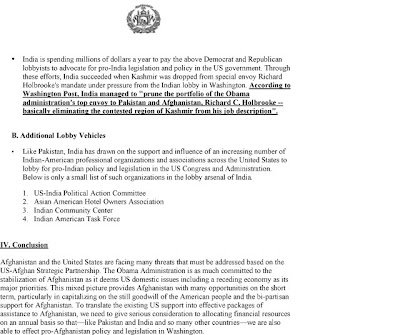
Afghanistan's US ambassador knows that influence comes with a steep price tag in DC. Read his confidential memo pleading for more lobbyists.


Sunday, June 21, 2009

'It's only a piece of cloth'

Can a woman in a hijab still get a taxi? asks Yvonne Ridley


The Observer


Wearing a headscarf is no big deal... unless you happen to be a Muslim, in which
case this simple piece of cloth arouses opinions, hostile glances and worse.

When I converted to Islam I knew I would have to embrace the Muslim head-dress.
As for many converts, it was a huge stumbling block and I found all sorts of
excuses not to wear the hijab - basically a symbol of modesty and a very public
statement. When I finally did, the repercussions were enormous. All I did was
put on a headscarf, but from that moment I became a second-class citizen.

The reaction from some people was unbelievable. I knew I would become a target
for abuse from the odd Islamaphobic oik, but I didn't expect so much open
hostility from complete strangers. I can no longer be sure of getting a black
cab in London... something I had taken for granted for many years. Let me give
you some examples from the past two weeks: Edgware Road in London, an area with
a substantial Arab population: three black cabs, orange 'for hire' lights
glowing, drive past one after another. It's about 11.30pm and I'm freezing and
desperate to get home. A fourth taxi stops to discharge a white passenger. I
reach the vehicle and tap the window, beaming from ear-to-ear at my saviour.
The driver turns and stares hard, his face contorted into hatred and rage, and
drives off.

Last month, pre-hijab, he would have returned the smile; now, in his eyes, I
have been transformed into a terrorist. Next day, horrified by the events of
the previous evening, I tell my story to a non-Muslim friend who is not
sympathetic. 'Well if you go around looking like a Chechen Black Widow what do
you expect?' she says. But black is my favourite colour. It's just that my
little black dress has become a big black dress. That afternoon, I change my
black hijab in favour of a paler silk turban-look which still covers my head.
Very Vivienne Westwood, I think. I get my black cab without hassle, just a mere
wave of the arm and I am taken to the West End for lunch with a very close
friend who happens to be Jewish. It was the first time she had seen me in a
hijab but she just laughs and makes some nice compliments. In her eyes I am the
same person she became friends with five years ago. No change. What a relief.

Later that day I meet some Muslim friends who also have not seen me for some
time. They are excited to see me wearing a hijab, but tell me I look like a
cross between a cancer victim and an Israeli settler. I report the unsavoury
incident in the Edgware Road which had reduced me to tears.

'Welcome to the real world. This is what we have to put up with 24/7,' one tells
me. There is more laughter at my apparent naivety, but I am puzzled and peeved
at their acceptance that this is the way of things in Britain today. A couple
of days later I attend Yasser Arafat's memorial at London's Friends' Meeting
House and dress appropriately in black with matching hijab showing a small
sliver of Palestinian kaffiyeh across the forehead.

I may as well be sporting a Hamas-green 'jihad' tattoo across my temple from the
openly hostile glares I receive from some passengers on London's Underground.
Feeling uncomfortable and intimidated I get off at Baker Street and go to a
taxi bay for the shortish journey down Euston Road. 'It's just across the road,
why don't you walk?' barks the cabbie before returning to his newspaper.

There have been other incidents including one taxi driver's, 'Don't leave a bomb
in the back seat,' or, 'Where's bin Laden hiding?' There are also amusing
moments such as being congratulated in Regent's Park mosque for my excellent
grasp of English.

But, in the eyes of many, I no longer am a real person. Waiters talk loudly and
slowly if I am on my own, and if I am with a non-hijabi female, she is asked
what I would like to eat. So, when I see a woman wearing a hijab, regardless of
whether I know her, I smile and say in Arabic, 'As-Salaam-Alaikum,' which means,
'Peace unto you'. I know that the rest of her encounters that day may well be
hostile.

Obama Siren Song to the Skeptical Muslim World


Athens, Greece – President Barack Obama came into office with an enormous reservoir of goodwill in the Muslim world. This was an asset no amount of American money or making nice could buy. But in recent weeks, he seems to have squandered a large part of this bounty.

After eight years of relentless hostility by the Bush/Cheney administration, the Muslim world greeted the advent of President Barack Obama with enormous hope and enthusiasm.

President Obama’s masterfully written, artfully delivered recent speech in Cairo was filled with precisely what the Muslim world had been waiting to hear: an intelligent, respectful American leader calling for normalized relations with the Muslim world, including former "bêtes noires" Iran and Syria, cooperation, and genuine US support for democracy and human rights.

But the Muslim world was not as charmed by Obama’s silver-tongued oratory as many Americans have been. The general response was, "actions speak louder than words. Where are the actions?"

Unfortunately, rather than a newly friendly, helpful United States promoting democracy and human rights, many Muslims saw the Obama administration expanding the war in Afghanistan that he could easily have ended, or at least put on hold upon taking office.

They saw the US-rented Pakistani Army create 3 million refugees in its Swat offensive against rebellious Pashtun tribesmen. The continuing US occupation of Iraq that many believe will never end. CIA’s covert campaign to destabilize Iran and Syria, and Washington’s continuing machinations in Somalia.

They listened to the US Congress applaud like trained circus seals Israel’s refusal to cease building illegal settlements or to respect the basic human rights of Palestinians. They heard US neoconservatives baying for war against Iran.

The Muslim world listened to Israeli leader Benjamin Netanyahu demand Palestinians recognize Israel as a Jewish state, thus delegitimizing that nation’s 20% Christian and Muslim minority, and negating any right to return by millions of Palestinian refugees. Netanyahu insisted Palestine would remain sealed from the outside by Israeli security forces.

Jerusalem would remain entirely in Israel’s hands. Israeli would continue expanding its existing settlements.

These facts unfortunately speak a lot louder than the president’s mellifluous oratory.

We would like to give the new president the benefit of the doubt. He has been in office only five months and will need a lot more time to begin repairing the catastrophic damage inflicted by the Bush administration on US interests and standing in the Muslim world and Europe. He must confront powerful Washington lobbies that have been entrenched for decades.

However, the White House’s recent actions seem disconnected from the new president’s promises.

Exhibit A: Obama unfortunately chose Egypt, of all places, from which to deliver his message to the Muslim world of amity, democracy and human rights.

Egypt’s US-backed military dictator, President Husni Mubarak, has held power for 27 years and is grooming his son, North Korean-style, to replace him. A third of the Arab world’s people live in Egypt. Rather than setting a progressive, democratic example for the Mideast, Egypt has is deeply repressive and out of step with the times.

Egypt’s human rights record is lamentable, as even senior US officials have complained. Its prisons are notorious for abuse and torture. The Bush administration routinely sent captives to Egypt for outsourced torture.

A far-too large army, corrupt oligarchy and ferocious secret police provide the foundation of the Mubarak regime’s power. The CIA simply replaced one "pharaoh," the late, unlamented Anwar Sadat, with another, Husni Mubarak. However, capable and clever he may be, Mubarak remains an autocrat who crushes all opposition and only tolerates yes-men.

Yet Egypt is America’s most important Muslim ally, along with Saudi Arabia. Is this what Obama means when he calls for democracy and human rights? He should have given his speech from democratic Indonesia, or the progressive United Arab Emirates and Qatar rather than Egypt, a pillar of America’s Mideast Raj. Or, he could have ordered Egypt to transform itself into a democracy, the way Muslim Indonesia did.

Who, one wonders, is advising the president on the Mideast and Afghanistan?


Exhibit B: Lebanon’s 7 June parliamentary elections. A US/French/Saudi-backed coalition of Sunni, Christians, and Druze was pitted against a Syrian-Iranian backed Hezbullah-led coalition that included Armenians and a Christian splinter faction.

Late last month, US Vice President Joseph Biden went to Lebanon and openly threatened to cut off all US aid to that nation of 3.9 million if the democratically-elected Hezbullah coalition won. Hillary Clinton made similar crude threats. Is this the kinder, gentler, more thoughtful Obama way? Even Dick Cheney kept his threats private.

Imagine the uproar if the Saudi crown prince came to the US just before elections and threatened to raise oil prices if Democrats won.

The United States, Saudi Arabia and France spent hundreds of millions of dollars bribing Lebanon’s venal politicians and buying votes. The US has been mucking around like this in Lebanon since 1957, often with disastrous results.

Iran spread some money around as well. Nothing new about that: Lebanon’s elections often are determined by who bought the most voters and politicians.

All the western "baksheesh" and some fancy vote rigging helped the US-backed March 14 coalition, headed by Saad Hariri, win 71 seats. The Hezbullah-led coalition won only a surprisingly small 57 seats. This left fragmented Lebanon just where it was before this sleazy election. The vote results reeked of fraud. But Washington hailed Lebanon’s vote.

Is this what Obama means by promoting good government and democracy in the Muslim world?

Exhibit C: Iran just had a hotly contested democratic election for president. The incumbent, Mahmoud Ahmadinejad, was blasted on TV by his opponents and subject to barrages of public criticism. There is not a single other Arab ally of the US, Lebanon excepted, where such feisty democratic behavior would be tolerated, and even less than would permit an honest vote.

Opponents in Iran are calling foul, claiming Ahmadinejad’s victory was rigged, but, so far, with little hard proof. However imperfect, Iran’s elections tend to be much fairer than those of their Arab neighbors or Pakistan.

Many Muslims and non-Muslims alike see Obama as an honest, decent, well-intentioned leader. But they are wondering if he has so far failed to impose his will on the entrenched financial-military-industrial, complex of which President Dwight Eisenhower warned, that remains the real power in Washington.

There is so much positive work President Obama could achieve in the Muslim world – but, so far, he certainly is not doing it. The song from Washington remains the same.

June 16, 2009

Eric Margolis [send him mail], contributing foreign editor for Sun National Media Canada. He is the author of War at the Top of the World and the new book, American Raj: Liberation or Domination?: Resolving the Conflict Between the West and the Muslim World. See his website.

Copyright © 2009 Eric Margolis

Wednesday, June 17, 2009

The Ending of America's Financial-Military Empire

By MICHAEL HUDSON

The city of Yekaterinburg, Russia’s largest east of the Urals, may become known not only as the end of the road for the tsars but of American hegemony too; as the place not only where US U-2 pilot Gary Powers was shot down in 1960, but where the US-centered international financial order was brought to ground.

Challenging America is the prime focus of extended meetings in Yekaterinburg, Russia (formerly Sverdlovsk) today and tomorrow (June 15-16) for Chinese President Hu Jintao, Russian President Dmitry Medvedev and other top officials of the six-nation Shanghai Cooperation Organization (SCO). The alliance is comprised of Russia, China, Kazakhstan, Tajikistan, Kyrghyzstan and Uzbekistan, with observer status for Iran, India, Pakistan and Mongolia. It will be joined on Tuesday by Brazil for trade discussions among the so-called BRIC nations --Brazil, Russia, India and China.

The attendees have assured American diplomats that it is not their aim to dismantle the financial and military empire of the United States. They simply want to discuss mutual aid – but in a way that has no role for the United States, for NATO or for the US dollar as a vehicle for trade. US diplomats may well ask what this really means, if not a move to make US hegemony obsolete. After all, that is what a multipolar world means. For starters, in 2005 the SCO asked Washington to set a timeline to withdraw from its military bases in Central Asia. Two years later the SCO countries formally aligned themselves with the former CIS republics belonging to the Collective Security Treaty Organization (CSTO), established in 2002 as a counterweight to NATO.

Yet the Yekaterinburg meeting has elicited only a collective yawn from the US and even European press despite its agenda -- nothing less than the replacement of  the global dollar standard with a new financial and military defense system. A Council on Foreign Relations spokesman has said he hardly can imagine that Russia and China can overcome their geopolitical rivalry, suggesting that America can use the divide-and-conquer that Britain used so deftly for many centuries in fragmenting foreign opposition to its own empire. But George W. Bush (“I’m a uniter, not a divider”) built on the Clinton administration’s legacy in driving Russia, China and their neighbors to find a common ground when it comes to finding an alternative to the dollar and hence to the US ability to run balance-of-payments deficits ad infinitum.

What may prove to be the last rites of American hegemony began already in April at the G-20 conference, and became even more explicit at the St. Petersburg International Economic Forum on June 5, when Mr. Medvedev called for China, Russia and India to “build an increasingly multipolar world order.” What this means in plain English is: We have reached our limit in subsidizing the United States’ military encirclement of Eurasia while also allowing the US to appropriate our exports, companies, stocks and real estate in exchange for paper money of questionable worth.

The artificially maintained unipolar system,” Mr. Medvedev spelled out, is based on “one big center of consumption, financed by a growing deficit, and thus growing debts, one formerly strong reserve currency, and one dominant system of assessing assets and risks.” At the root of the global financial crisis, he concluded, is the fact that the United States makes too little and spends too much, particularly its vast military outlays, such as the stepped-up US military aid to Georgia announced just last week, the NATO missile shield in Eastern Europe and the US buildup in the oil-rich Middle East and Central Asia.

The sticking point for all these countries is the ability of the United States  to print unlimited amounts of dollars. Overspending by U.S.  consumers on imports in excess of exports, U.S. buy-outs of foreign companies and real estate, and the dollars that the Pentagon spends abroad all end up in foreign central banks. These banks  then face a hard choice: either to recycle these dollars back to the United States by purchasing US Treasury bills, or to let the “free market” force up their currency relative to the dollar – thereby pricing their exports out of world markets and hence creating domestic unemployment and business insolvency.

When China and other countries recycle their dollar inflows by buying US Treasury bills to “invest” in the United States, this buildup is not really voluntary. It does not reflect faith in the ability of the U.S. economy to enrich foreign central banks for their savings. Nor does it represent any calculated investment preference. It is  simply a matter of a lack of alternatives. U.S.-style “free markets” hook countries into a system that forces them to accept dollars without limit. Now they want out.

This means creating a new alternative. Rather than making merely “cosmetic changes as some countries and perhaps the international financial organisations themselves might want,” said  Mr. Medvedev at the end of  his St. Petersburg speech, “what we need are financial institutions of a completely new type, where particular political issues and motives, and particular countries will not dominate.”

When foreign military spending forced the US balance of payments into deficit and drove the United States off gold in 1971, central banks were left without the traditional asset used to settle payments imbalances. The alternative was to invest their subsequent inflows of US dollars  in US Treasury bonds, as if these still were “as good as gold.” Central banks now hold $4 trillion of these bonds in their international reserves. These loans have financed most of the US Government’s domestic budget deficits for over three decades now! Given the fact that about half of US Government discretionary spending is for military operations – including more than 750 foreign military bases and increasingly expensive operations in the oil-producing and transporting countries – the international financial system is organized in a way that finances the Pentagonand also US buyouts of foreign assets expected to yield much more than the Treasury bonds that foreign central banks hold.

The main political issue confronting the world’s central banks is therefore how to avoid adding yet more dollars to their reserves and thereby financing yet further US deficit spending – including military spending on their borders.

For starters, the six SCO countries and BRIC countries intend to trade in their own currencies so as to get the benefit of mutual credit that the United States until now has monopolized for itself. Toward this end, China has struck bilateral deals with Argentina and Brazil to denominate their trade in renminbi rather than the dollar, sterling or euros, and two weeks ago China reached an agreement with Malaysia to denominate trade between the two countries in renminbi. Former Prime Minister Tun Dr. Mahathir Mohamad explained to me in January that as a Muslim country, Malaysia wants to avoid doing anything that would facilitate US military action against Islamic countries, including Palestine. The nation has too many dollar assets as it is, his colleagues explained. Central bank governor Zhou Xiaochuan of the People's Bank of China put  an official statement on the bank’s website, explaining  that the goal is now to create a reserve currency “that is disconnected from individual nations.” This is the aim of the discussions in Yekaterinburg.

Aside from no longer financing the U.S. buyout of their own industries  and the U.S. military encirclement of the globe, China, Russia and other countries would no doubt like to enjoy the same kind of free ride that America has been getting. As matters stand now, they see the United States as a lawless nation, financially as well as militarily. How else to characterize a nation that proclaims a set of laws for others – on war, debt repayment and treatment of prisoners – but flouts them itself? The United States is now the world’s largest debtor yet has avoided the pain of “structural adjustments” imposed on other debtor economies. U.S. interest-rate and tax reductions in the face of exploding trade and budget deficits are seen as the height of hypocrisy in view of the austerity programs that Washington forces on other countries via the IMF and other Washington vehicles.

The United States tells debtor economies to sell off their public utilities and natural resources, raise their interest rates and increase taxes while gutting their social safety nets to squeeze out money to pay creditors. And at home, Congress blocked, on grounds of national security, China’s CNOOK from buying Unocal, much as it blocked Dubai from buying US ports and blocked other sovereign wealth funds from buying into key infrastructure. Foreigners are invited to emulate the Japanese purchase of white elephant trophies such as Rockefeller Center, on which investors quickly lost a billion dollars and ended up walking away.

In this respect the US has given China and other payments-surplus nations no alternative but to find a way to avoid further dollar buildups. To  date, China’s attempts to diversify its dollar holdings beyond Treasury bonds have not proved very successful. For starters, Hank Paulson of Goldman Sachs steered its central bank into higher-yielding Fannie Mae and Freddie Mac securities, explaining that these were de facto public obligations. They collapsed in 2008, but at least the U.S. Government took over these two mortgage-lending agencies, formally adding their $5.2 trillion in obligations to the national debt. In fact, it was largely foreign official investment that prompted the bailout. Imposing a loss for foreign official agencies would have broken the Treasury-bill standard then and there, not only by utterly destroying US credibility but because there simply are too few Government bonds to absorb the dollars being flooded into the world economy by the soaring US balance-of-payments deficits.

in late 2007, seeking more of an equity position to protect the value of their dollar holdings as the Federal Reserve’s credit bubble drove interest rates down, China’s sovereign wealth funds sought to diversify. China bought stakes in the well-connected Blackstone equity fund and Morgan Stanley on Wall Street, Barclays in Britain,  South Africa’s Standard Bank (once affiliated with Chase Manhattan back in the apartheid 1960s) and in the soon-to-collapse Belgian financial conglomerate Fortis. But the US financial sector was collapsing under the weight of its debt pyramiding, and prices for shares plunged for banks and investment firms across the globe.

Foreigners see the IMF, World Bank and World Trade Organization as Washington surrogates in a financial system backed by American military bases and aircraft carriers encircling the globe. But this military domination is a vestige of an American empire no longer able to rule by economic strength. US military power is muscle-bound, based more on atomic weaponry and long-distance air strikes than on ground operations, which have become too politically unpopular to mount on any large scale.

On the economic front there is no foreseeable way in which the United States can work off the $4 trillion it owes foreign governments, their central banks and the sovereign wealth funds set up to dispose of the global dollar glut. America has become a deadbeat –a militarily aggressive one -- as it sruggles to hold onto the immense power it once earned by economic means. The problem for the rest of the world  is how to constrain its behavior. Yu Yongding, a former Chinese central bank advisor now with China’s Academy of Sciences, suggested that US Treasury Secretary Tim Geithner be advised that the United States should “save” first and foremost by cutting back its military budget. “U.S. tax revenue,” he said, “is not likely to increase in the short term because of low economic growth, inflexible expenditures and the cost of ‘fighting two wars.’”

At present foreign savings are what finance the US budget deficit by buying most Treasury bonds. The consequence is taxation without representation for foreign voters as to how the US Government uses their forced savings. It therefore is necessary for the financial diplomats to broaden the scope of their policy-making beyond the private-sector marketplace. Exchange rates are determined by many factors besides “consumers wielding credit cards,” the usual euphemism that the US media cite for America’s balance-of-payments deficit. Since the 13th century, war has been a dominating factor in the balance of payments of leading nations – and of their national debts. Government bond financing consists mainly of war debts, as normal peacetime budgets tend to be balanced. This links the war budget directly to the balance of payments and exchange rates.

Foreign nations see themselves stuck with unpayable IOUs under conditions where, if they move to stop the US free lunch, the dollar will plunge and their dollar holdings will fall in value relative to their own domestic currencies and other currencies. If China’s currency rises by 10 per cent  against the dollar, its central bank will show the equivalent of a $200 million loss on its $2 trillion of dollar holdings as denominated in yuan. This explains why, when bond ratings agencies talk of the US Treasury securities losing their AAA rating, they don’t mean that the government cannot simply print the paper dollars to “make good” on these bonds. They mean that dollars will depreciate in international value. And that is just what is now occurring. When U.S. Treasury Secretary Geithner assumed an earnest mien and told an audience at Peking University in early June that he believed in a “strong dollar” and China’s US investments therefore were safe and sound, he was greeted with derisive laughter.

Anticipation of a rise in China’s exchange rate provides an incentive for speculators to seek to borrow in dollars to buy renminbi and benefit from the appreciation. For China, the problem is that this speculative inflow would become a self-fulfilling prophecy by forcing up its currency. So the problem of international reserves is inherently linked to that of capital controls. Why should China see its profitable companies sold for yet more freely-created US dollars, which the central bank must use to buy low-yielding US Treasury bills or lose yet further money on Wall Street?

To steer round this quandary it is necessary to reverse the philosophy of open capital markets that the world has held ever since Bretton Woods in 1944. On the occasion of Mr. Geithner’s visit to China, Zhou Xiaochuan, minister of the Peoples Bank of China, the country’s central bank, said pointedly that this was the first time since the semiannual talks began in 2006 that “China needed to learn from American mistakes as well as its successes” when it came to deregulating capital markets and dismantling controls.

So an era is winding to its end. In the face of continued US overspending, de-dollarization threatens to force countries to return to the kind of dual exchange rates common between World Wars I and II: one exchange rate for commodity trade, another for capital movements and investments, at least from dollar-area economies.

Even without capital controls, the nations meeting at Yekaterinburg are taking steps to avoid being the unwilling recipients of yet more dollars. Seeing that U.S. global hegemony cannot continue without the spending power that they themselves supply, governments are attempting to hasten what Chalmers Johnson has called “the sorrows of empire” in his book by that name – the bankruptcy of the US financial-military world order. If China, Russia and their non-aligned allies have their way, the United States will no longer live off the savings of others in the form of its own recycled dollars, nor have the money for unlimited military expenditures and adventures.

US officials wanted to attend the Yekaterinburg meeting as observers. They were told No. It is a word that Americans will hear much more in the future.


Michael Hudson is a former Wall Street economist. A Distinguished Research Professor at University of Missouri, Kansas City (UMKC), he is the author of many books, including Super Imperialism: The Economic Strategy of American Empire(new ed., Pluto Press, 2002) He can be reached via his website, mh@michael-hudson.com


Putin's grand gesture cannot hide Russia's woes

Russian Prime Minister Vladimir Putin chairs a meeting in the town of Pikalyovo
Vladimir Putin fixes his stare on Oleg Deripaska at last week's meeting in Pikalyovo

World Agenda:

It was a captivating snapshot of Russia’s deepening economic woes: Oleg Deripaska, once the country’s richest man, stood bowed and cowed before the furious stare of Vladimir Putin, the Prime Minister.

Both men had gone to Pikalyovo, a town near St Petersburg, in response to a revolt by impoverished residents over unpaid wages. Two days earlier, angry crowds had blocked a major highway causing a 250-mile traffic jam.

Pikalyovo’s three cement plants, including one owned by Mr Deripaska, have shut down in the economic crisis, making most of the town unemployed. Mr Putin criticised the owners of the plants for their failure to resume production, casting himself as the defender of ordinary Russians.

“You have made thousands of people hostage to your ambitions, your lack of professionalism or maybe simply your trivial greed,” he said in his televised speech last week. “Why was everyone running around like cockroaches before my arrival? Why was no one capable of making decisions?”

Mr Putin has agreed to pay the unemployed cement workers 40 million roubles (£790,000)out of government funds. While the people of Pikalyovo are pleased by his intervention, those in thousands of other towns all over Russia are in equally dire straits and growing increasingly frustrated.

Days later, workers went on hunger strike over unpaid wages at another of Mr Deripaska’s businesses, a paper mill near Lake Baikal in Russia’s far east. The billionaire needed no visit from Mr Putin this time before announcing that 2,000 workers would get what they were owed.

There have been protests in Vladivostok and a dozen other cities in the far east over new import tariffs on foreign cars imposed by Mr Putin to protect domestic manufacturers. Many depend on the import business for their livelihoods and took to the streets brandishing posters calling for Mr Putin to be sacked.

Pensioners protest over soaring inflation, students struggle to find loans for their studies, and wage arrears are rising in many industries. Even the Putin middle classes, which got used to a comfortable lifestyle in the oil-fuelled boom years, are discovering the terror of unemployment and an inability to repay mortgages and personal loans.

It is a potent cocktail that has the Kremlin fearful that discontent in an anonymous town such as Pikalyovo could spark a wider revolt.

Hence Mr Putin’s furious denunciation of Mr Deripaska — long seen as the Kremlin’s favourite oligarch. The broader message he sent to business leaders was that they would be held responsible if neglected workers in towns dominated by single industries or companies took to the streets in anger.

Most discontent has been isolated and focused principally on economic rather than political grievances. But Mr Putin may have inadvertently fanned the flames of wider unrest.

As the financial crisis continues, with little sign of an upturn, more and more people will be desperately looking for help as their personal resources run out. Hunger and winter are a potentially lethal combination, particularly if the economy is hit by a much-discussed “second wave” of the crisis triggered by rising defaults on bank loans.

Unhappy workers across the country are drawing the lesson from Pikalyovo that protest works. With his dramatic helicopter dash to the town Mr Putin has also set a standard for government action to resolve people’s problems. He can not throw money at every town and factory in trouble, but those who do not get the help they demand now have an additional reason to take to the streets.


Tuesday, June 16, 2009

China Tests the Waters

HONG KONG — China is testing its influence in every direction, trying to balance its need to be seen as a fair global player with its nationalist instincts, to balance a genuine internationalism against the paranoia that comes naturally to a closed political system.

This week the locus has been the Ural city of Yekaterinburg, host to the first official meeting of the BRIC — the catchy acronym invented by Goldman Sachs to make a group from the four largest emerging markets, China, India, Brazil and Russia. If the meeting showed anything it was that their strategic economic interests are very different, though tactical alliances do occur.

The one thing they appeared to agreed on was that however much they would like to reduce the role of the dollar in the international financial system, doing so was another matter. So much for the BRIC as a coherent group rather than a stock salesman’s slogan. China will continue to play along if the others want but is under few illusions about BRIC.

Next, also in Yekaterinburg, was the annual meeting of the Shanghai Cooperation Organization that brings together China, Russia and the Central Asian republics, with India, Pakistan and Iran as observers. Founded as a counter both to U.S. influence in the region and to radical Islam, it is publicly seen as a example of Sino-Russian cooperation.

In practice, however, its relevance may be declining. The United States is being less pushy in Central Asia; Sino-Russian rivalry for influence in that region is clearer than ever; and there is more worry than anger over the U.S. predicament in Afghanistan and Pakistan. And all are wary of an Iran combining theocratic nationalism with domestic power plays.

More significant than these talk-fests for China and the U.S. are the minor confrontations that have been occurring in the South China Sea. In March, the U.S. complained of the harassment of an unarmed naval vessel that was in international waters, but within China’s exclusive economic zone. The U.S. claimed right of “innocent passage”; the Chinese alleged that the vessel was interfering with its economic rights.

In another encounter last week, a Chinese submarine hit a sonar device being towed by a U.S. naval vessel near the Subic Bay naval base but outside Philippine territorial waters, where it was taking part in joint exercises. The United States has chosen to play down the incident as an “inadvertent encounter,” but it again gave notice of China’s long-term goal of making the South China Sea a Chinese lake.

The incident drew mixed responses in the Philippines, which sum up the dilemma among China’s small neighbors of how to respond to its power and its ability to enforce its territorial claims. Some Philippine voices called for strengthening of their own defenses and their alliances with the U.S. and Japan. Others suggested that its Visiting Forces Arrangement, under which the exercises were taking place, was an unnecessary provocation to China.

On the economic front, China has had to face the harsh realities of the limits of its buying power and cash in the international marketplace, as exemplified by the failure of the bid by state-owned Chinalco to acquire a major stake in mining giant Rio Tinto.

Instead of getting influence in the world’s No. 3 iron ore producer, China, as chief customer, now finds itself facing two groups dominating global iron ore trade — a new alliance between Rio Tinto and fellow Anglo-Australian miner BHP-Billiton, and Brazil’s Vale do Rio Doce. The Brazilians are unlikely to get into a price war with the Australians for the sake of their BRIC partner.

Although Chinese Internet chat rooms were abuzz with nationalist resentment at Chinalco’s rebuff, official Beijing took the news calmly, acknowledging that its enterprises were often poorly equipped for big international forays. However it is threatening a challenge to the Rio-BHP alliance on monopoly grounds. China would deserve sympathy on that score but for its own preference that state-owned oligopolies control the commanding heights of the economy.

China is finding that domestic and international policy on competition and ownership issues can no longer be separated.

Monday, June 15, 2009

Gulbadin Hekmatyar

Gulbadin Hekmatyar, Fugitive Chief of Hizb-e-Islami in Afghanistan: 'Iran Helped America in Capturing Afghanistan and Iraq'; 'Iran is Ready for Friendship with All Communists, Hindus, Christians, and Any Other Enemy of Islam Against Sunni Muslims'; 'I Hope Not to Take Political Asylum in Saudi Arabia or Any Other Country'

Gulbadin Hekmatyar, the leader of Hizb-e-Islami in Afghanistan, recently gave an interview to the Pashtu-language Afghan website Benawa.com. Hizb-e-Islami is one of the key militant organizations in Afghanistan.

Recently, officials from the Hizb-e-Islami as well as from Afghan and U.S. governments have held secret talks aimed at brokering peace in Afghanistan. However, such talks have not borne fruit, due to Gulbadin Hekmatyar's key demand that the U.S. first announce a timetable for the withdrawal of U.S. troops from Afghanistan.

Following are some excerpts from the interview, originally published in the Pashtu language:

"As Far as the Mujahideen are Concerned, We Will Not Accept a Solution Which Cannot Guarantee the Foreign Forces' Withdrawal Without Any Condition"

Q: Rumors of talks between your party and the Afghan government have been circulating recently, and your spokesmen have also confirmed that Dr. Ghairat Baheer, Qaribur Rahman Saeed, and Daud Abidi of Hizb-e-Islami are busy with these talks. How much do you confirm these peace talks?

A: "We have no formal talks with the Kabul administration; the released rumors on this issue are not correct. The Kabul administration and their foreign supporters are spreading these rumors for specific aims. None of our officials has said that we are in formal negotiation with the Kabul administration. The Kabul administration doesn't have enough authority and power to do something for the solution of the crisis. If a government cannot prevent the foreigners from committing civilian casualties; if their voice is not being heard by the international forces regarding the civilian casualties, then how would it be able to take decisions about the important issues facing this country? Isn't it very bad to have expectations from such administration?"

Q: Do you think the U.S. will be ready to accept your main demands, such as the withdrawal of foreign forces, or at least drawing a specific timetable for them?

A: "Americans will withdraw from Afghanistan very soon Insha'Allah. They have no other options but to leave. I don't think they would have the patience and ability for long-lasting war, [nor] would they stomach the result of the war. As far as the Mujahideen are concerned, we will not accept a solution which cannot guarantee the foreign forces' withdrawal without any condition."

"Even if the Post of President is Offered to Me, I Would Rather Choose a Night in the Battlefield of Jihad than Being President for 100 Years; I Would Rather Die Than Live Like a Servant"

Q: If you come to Kabul, will you be as the leader of your party and an active member of the Afghan government, or will you gradually be stepping out of politics as the two other jihadi leaders Burhanuddin Rabbani and Abdul Rab Rasool Sayaf have faced? Or would you prefer to participate in peace talks because Hizb-e-Islami is an active political party and a political party wants a complete political share?

A: "In the presence of invaders [Americans], I have no wish to go to Kabul, nor do I want to take part in the puppet government [headed by Afghan President Hamid Karzai]. Even if the post of president is offered to me, I would rather choose a night in the battlefield of jihad than being president for 100 years. I would rather die than live like a servant…"

"Our Main Aim from the Negotiations is the Freedom and Integrity of the Country and the Withdrawal of All Foreign Forces as Soon as Possible... Not Just to Take Part in the Government"

"If the opposite side becomes ready to accept realities, leaves its focus on continuing the war, accepts that Afghanistan is the house of Afghans, and lets them choose a leader for themselves, then in this case we think that negotiation is productive, and we are ready for that. Because our main aim from the negotiation is the freedom and integrity of the country and the withdrawal of all foreign forces as soon as possible. Our aim from the negotiation is not just to take part in the government."

Q: Regarding political share, what would you want from the Kabul administration? Would they agree to give many posts to your party or, as it is rumored, would you be glad just for the post of the foreign ministry and some other posts?

A: "We have no negotiations with the Kabul administration, nor do we expect any positive step from them. And we will not take part in a government which is controlled by foreigners and in which foreign advisors are assigned in their offices and foreign commanders in their front line."

Q: If you become successful in negotiations, what will be the stance of your Mujahideen who are currently fighting against the foreign forces?

A: "Our all loyal brothers [fighters] have one stance in both negotiation and in jihad and resistance."

"If There Are Some Private Meetings, Those Meetings Must Not be Counted as Formal Negotiations; I Want to Reiterate That We Have No Formal Talks with Kabul Officials"

Q: Your spokesmen have confirmed peace talks, and Ghairat Baheer and Qaribur Rahman Saeed had talks with some officials inPakistan and in some other countries. Wwhat do you say?

A: "I heard no such words from any of the two persons, and no peace talks were conducted in Pakistan or in any other country. If there are some private meetings, those meetings must not be counted as formal negotiations. I want to reiterate that we have no formal talks with Kabul officials."

Q: President Hamid Karzai also confirmed these peace talks; he even said already that he will announce his candidacy after the peace talks are successful. So he announced his candidacy for reelection as president a few weeks ago. Doesn't that mean that peace talks are successful?

A: "If Karzai counts his meeting with those Taliban and our party members who are already in Kabul, that's his fault. He just wants to say that in order to earn the support of those people who are tired of war. He wants to show those people that Karzai is trying to end the war. Prove it to me, with which of the oppositions he had talks and has been successful? My party had no such talks, and I am sure that Taliban also have not talked with him. So if Karzai is pointing to Qaseem Fahim and Kareem Khalili [former jihadi leaders and warlords] whom he selected as his running mates in the elections, and both of them have fought against our party, so Karzai's stance means that still he wants the continuation of war."

Q: Isn't Ghairat Baheer's release for this purpose, i.e. to continue the peace talks?

A: "No, that's not true. Baheer spent six years in American jails in Bagram and Guantanamo Bay. He was kept in very small dark rooms no wider than a small table. He saw his face in mirror after six years for the first time. Haji Gul Rahman was also detained with him, and still it's not clear if he has been martyred or is still alive. These people had helped Karzai to get out… of prison…. [Karzai] promised himself that he will release them or quit his presidency - but look, Gul Rahman is still not released, but Karzai is president.

"Anyhow, I repeat my statement that I didn't assign Baheer to participate in peace talks."

Q: What is the role of those members of your party in peace talks who are living in Kabul? It is said that they are still counted as branch of your party and that you guide them directly.

A: "They form two groups from our party in Kabul. One group is loyal to our party, believes in jihad and in the country's freedom. They see the Americans as they did the Russians [in the 1980s, i.e. as invaders], and will not agree to anything less than an Islamic government. But the second group was disloyal and only partial friends; they surrendered to the American Kabul government, they cut off relations with us, but they are few, they are insulted now; even their families don't love them."

Q: The separated branch of Hizb-e-Islami is campaigning for you in Kabul and many of them are candidates for the provincial councils. They are paving the road for your coming to Kabul. Does this move have any link with the recent peace talks?

A: "There are no such negotiations, and their movements have no connection with peace talks, and we did not tell anyone to pave the road for us to go to Kabul. Those who cannot go from one area to another in Kabul without foreigners' permission - how can they pave the road for our coming?"

"I Don't Want a Guarantee for My Head From Anyone Except God; We Decided to Sacrifice Ourselves in the Way of God... This is My Strong Decision - That I Must Be in My Country, Whether I am Alive or Dead; I Don't See Any Brave Country in The World to Give Political Asylum to a Mujahid"

Q: Anyhow, if you join the planned peace talks, Saudi Arabia grants you asylum, and then you come to Kabul, who should guarantee your safety - because this time, no one's safety can be guaranteed?

A: "There is no specific plan for peace talks, and I hope not to take political asylum in Saudi Arabia or any other country. I don't want a guarantee for my head from anyone except God. We decided to sacrifice ourselves in the way of God. This is my strong decision that I have to be in my country whether I am alive or dead. I don't see any brave country in the world to give political asylum to a Mujahid. I am also ashamed for having gone to Iran, God forgive me. I will not repeat such a mistake again, if God is willing.

"Kabul officials are depending on foreigners for their security. Foreign security guards are assigned to their offices and houses. They cannot guarantee the safety of those Afghans living under their authority. Many Afghans are being killed in daily bombardment. So, how can we want the guarantee for our safety from such a government?"

Q: For the time being, a few former members of your party are assigned as ministers in the Hamid Karzai's government, and dozens of others are governors, deputy governors, senators, MPs, and head of many offices. Don't you think it is the clear indirect share in the government which will pave the road for the direct share?

A: "Those who joined the Karzai government were members of our party, but now they are not, because they accepted posts in the Kabul American government. They cannot represent our party directly and will not pave the road for indirect power share. These members are recruited to the government just to weaken our party and to cause confrontations among our groups - but, thanks to God, the enemy has not been successful in absorbing many of our friends and weakening us."

"[Our Key Demands Are:] Inter-Afghan Negotiation; Complete Withdrawal of Foreign Forces; a Perfect and Practical Timetable for Such A Withdrawal; Transition of the Authority to an Interim and Non-coalition Government; Free and Fair Election; Change of These Foreign Forces by Islamic Forces If Necessary For the Security of Other Parties - But These Forces Must not Be From Our Neighboring Countries... [and] Must Not Live in Cities and Must Be Under the Command and Observation of the Interim Government"

Q: One of the main obstacles for peace talks is the presence of foreign forces in Afghanistan. Will you be ready in their presence to join the government? If not, what is the solution? Is it the withdrawal? Is it making a timetable for them? Or is it deployment of alternative Islamic forces from Islamic nations?

A: "The presence of the foreign forces is the main cause of the start and of the continuance of the war. In their presence, we will not join any government. We have a clear draft for the solution of the current crisis of which the main points are: inter-Afghan negotiation, the complete withdrawal of foreign forces, a perfect and practical timetable for such a withdrawal, transition of the authority to an interim and non-coalition [2] government, free and fair election, the change of these foreign forces by Islamic forces if necessary for the security of other parties, but these forces must not be from our neighboring countries. These forces must not live in the cities and must be under the command and observation of the interim government."

Q: There is also some confrontation between you and the Taliban. Neither of you accept each other for leadership; also, you don't have similar ideas about having a government. Don't you think you will fight with each other once again if the situation is changed?

A: "We don't even have the same ideas in many aspects with the Taliban, but we have one idea regarding jihad and withdrawal of foreign forces, and this is a very important point this time. We can reach out to one another if we talk. I have told this to the Taliban as well - let's come together and create one platform, and together fight our enemy."

Q: How do you view Iran's role in Afghanistan, since it has launched an extensive campaign to promote Shi'ite and cultural issues in this country?

A: "Iran is playing a very bad game. They opted for a dangerous policy against Afghanistan. Iran has had a hand in almost all fighting in Afghanistan since the withdrawal of the Russian forces. That time, Iran together with Moscow created the [anti-Taliban] Northern Alliance, to prevent the creation of a Mujahideen government. Russian-made weapons and Afghan currency were coming through Iran from Russia. Iran also helped America in capturing both Afghanistan and Iraq.

"In conclusion, Iran is ready for friendship with all communists, Hindus, Christians, and with any other enemy of Islam against Sunni Muslims."

Q: One thing that I have found in your interviews and speeches is that you are not directly condemning Hamid Karzai, and he is also doing the same. Can you tell me what is the fact behind that?

A: "We have no personal enmity with anyone. Our jihad is for Islam and for fighting only non-Muslim invaders. We focus on the main enemy in the fight, and tell our Mujahideen to expend their strength on the main enemy and not to be busy with others…."


www.benawa.com,


New Detainee Statements Provide More Evidence of CIA Torture Program


CIA Continues To Suppress Information From Detainee Tribunals With Heavy Redactions

FOR IMMEDIATE RELEASE
CONTACT: (212) 549-2666; media@aclu.org

NEW YORK – The CIA today released still-highly redacted documents in which Guantánamo Bay prisoners describe abuse and torture they suffered in CIA custody. The documents were released as part of an American Civil Liberties Union Freedom of Information Act (FOIA) lawsuit seeking uncensored transcripts from Combatant Status Review Tribunals (CSRTs) that determine if prisoners held by the Defense Department at Guantánamo qualify as "enemy combatants." In previously released versions of the documents, the CIA had removed virtually all references to the abuse of prisoners in their custody; the documents released today are still heavily blacked out but include some new information.

"The documents released today provide further evidence of brutal torture and abuse in the CIA's interrogation program and demonstrate beyond doubt that this information has been suppressed solely to avoid embarrassment and growing demands for accountability," said Ben Wizner, a staff attorney with the ACLU National Security Project and lead attorney on the FOIA lawsuit. "There is no legitimate basis for the Obama administration's continued refusal to disclose allegations of detainee abuse, and we will return to court to seek the full release of these documents."

The newly unredacted information includes statements from the CSRTs of former CIA detainees, including Khalid Sheikh Muhammad, Abd Al Rahim Hussein Mohammed Al Nashiri, Abu Zubaydah and Majid Khan, including descriptions of torture and coercion. These statements include:

• Abu Zubaydah: "After months of suffering and torture, physically and mentally, they did not care about my injuries that they inflicted to my eye, to my stomach, to my bladder, and my left thigh and my reproductive organs. They didn't care that I almost died from these injuries. Doctors told me that I nearly died four times." "They say 'this in your diary.' They say 'see you want to make operation against America.' I say no, the idea is different. They say no, torturing, torturing. I say 'okay, I do. I was decide to make operation.'"

• Al Nashiri: "[And, they used to] drown me in water."

• Muhammad: "This is what I understand he [CIA interrogator] told me: you are not American and you are not on American soil.  So you cannot ask about the Constitution."

• Khan: "In the end, any classified information you have is through…agencies who physically and mentally tortured me."

"The information released today sheds some new light on the CIA's torture program, but there are still unanswered questions," said Jameel Jaffer, Director of the ACLU National Security Project. "The Obama administration should make good on its commitment to transparency, stop suppressing information about torture and abuse and hold accountable the officials who put unlawful policies in place."

Attorneys in this case are Wizner and Jaffer of the ACLU National Security Project, Judy Rabinovitz and Amrit Singh of the ACLU Immigrants' Rights Project, and Arthur B. Spitzer of the ACLU of the National Capital Area.

World Agenda: Looking to the future without the West

Russian President President Dmitry Medvedev shakes hands with his Chinese counterpart Hu Jintao

The Russian President Dmitry Medvedev, right, shakes hands with his Chinese counterpart Hu Jintao before a closed meeting of SCO leaders in Yekaterinburg

In the place where Europe slides into Asia, the world without the West is gathering to flex its political and economic muscles.

The Bric nations — Brazil, Russia, India and China — and the members of the Shanghai Co-operation Organisation (SCO) are attending simultaneous summits for the first time. The meetings, in the Russian city of Yekaterinburg, give a glimpse of the globe tilting east and south in coming decades, away from the traditional dominance of the United States and Europe.

For advocates of the inevitable triumph of liberal democracy, this is a depressing prospect. Brazil and India are thriving democracies but the prime characteristic of most of the governments gathered here in the Urals is authoritarian, often of the ugliest variety. Apart from China and Russia, the SCO comprises the former Soviet states of Kazakhstan, Uzbekistan, Tajikistan and Kyrgyzstan. President Ahmadinejad of Iran, busy crushing protest over his “landslide” re-election, has observer status, along with India, Pakistan and Mongolia. President Karzai of Afghanistan will also be present.

Almost half the world’s population is represented by the two organisations and a growing proportion of global GDP. This is the first summit of heads of state of the Bric countries, whose increasing economic clout has merely been dented by the financial crisis compared with the battering endured by the US and the European Union.

If geography largely unites these countries (with the obvious exception of Brazil), it is much harder to say whether they have common agendas. China and Russia certainly regard the SCO as a means to shut the US out of Central Asia, their shared “back yard”, but both are rivals for access to the region’s vast energy resources.

They view the SCO as a potential counterweight to Nato, in political terms at least, but the mechanisms do not exist for a projection of serious co-ordinated military power across the region — even if they could agree on an objective. Russia, which holds the SCO’s rotating presidency, is pressing a security agenda to counter threats from terrorism, particularly Islamic extremism, and drug trafficking from Afghanistan.

The Bric states are determined to break up the cosy club of the G8 economies. Celso Amorim, Brazil’s Foreign Minister, declared the death of the G8 in Paris last week, saying: “It doesn’t represent anything any more.”

Talk of supplanting the dollar as the global reserve currency with regional alternatives such as the Chinese yuan or the Russian rouble is still far from practical. But it is no longer unthinkable, a measure of how much the global architecture is shifting.

Russia craves the restoration of its international status as the dominant power in the former Soviet region and through its leadership with China in the two organisations. The former Communist rivals have never been on better terms, evidenced by booming trade and a state visit to Moscow by President Hu immediately after the two summits.

Whatever the hurdles to co-ordinated action by the countries gathered in Yekaterinburg, the model of authoritarian prosperity espoused by many members of the two blocs is a challenge to Western notions of progress. The US and the EU can only watch, uninvited, from outside as these powers of the non-Western world debate their visions of the political and economic future.

Comments:

Shaleen, to me you hit the problem. This group's only true identity is a reactive one against the "West". While the size of the nations involved means their economies will make them powerful enough to become global leaders, the nature of the regimes offer no true long-term alternatives to lib. dem.

Dave, Beijing, China

Russia and China know NATO remains an expansionist threat and has to be stopped. They know that the Americans and the British are envious of their new-found prosperity. And so they will create alliances of like-minded members to checkmate the US and UK.

Shaleen Mathur, Beijing, China

The point is not that BRIC countries have disputes. It is to leave them for another generation that can deal with them better. In the meantime, they want to become as rich and powerful like before - Russia before 1991, China before 1800 and India prior to 1700 when the Europeans were running riot.

Alka Jayaram, Delhi, India


Iran's aim is to be under the SCO's nuclear umbrella, for this reason Iran have signed away billions of dollars in oil contracts with Russia and China. Their wish is never to be "Iraqed".

jayil, london, uk

No orgnization with dictators in the helm will last long. There are bitter disputes between the member countries of SCO; it can’t match the leadership of NATO or EU. SCO is a grand show for dreamers entertaining the world. 

De Mel, Halifax,


Brazil, Russia, India and China form bloc to challenge US dominance

Times Online

With public hugs and backslaps among its leaders, a new political bloc was formed yesterday to challenge the global dominance of the United States.

The first summit of heads of state of the BRIC countries — BrazilRussiaIndia and China — ended with a declaration calling for a “multipolar world order”, diplomatic code for a rejection of America’s position as the sole global superpower.

President Medvedev of Russia went further in a statement with his fellow leaders after the summit, saying that the BRIC countries wanted to “create the conditions for a fairer world order”. He described the meeting with President Lula da Silva of Brazil, the Indian Prime Minister, Manmohan Singh, and the Chinese President, Hu Jintao, as “an historic event”.

The BRIC bloc brings together four of the world’s largest emerging economies, representing 40 per cent of the world’s population and 15 per cent of global GDP. The leaders set out plans to co-operate on policies for tackling the global economic crisis at the next G20 summit in the US in September.


“We are committed to advance the reform of international financial institutions so as to reflect changes in the world economy. The emerging and developing economies must have a greater voice,” they said.

The BRIC states also pledged to work together on political and economic issues such as energy and food security. Co-operation in science and education would promote “fundamental research and the development of advanced techologies”.

The declaration also satisfied a key Kremlin demand by calling for a “more diversified international monetary system”. President Medvedev is seeking to break the dominance of the US dollar in financial markets as the world’s leading reserve currency.

He favours the establishment of more regional reserve currencies, including the Russian rouble and the Chinese yuan, to prevent economic shocks. Mr Medvedev said: “The existing set of reserve currencies, including the US dollar, have failed to perform their functions.”

The declaration made no specific mention of the dollar, an indication of China’s reservations about the Russian idea. Beijing holds almost $2 trillion in foreign currency reservesand a large portion of US debt.

The BRIC summit coincided with a two-day meeting of the Shanghai Co-operation Organisation (SCO) in Yekaterinburg, which further underlined the determination of Moscowand Beijing to assert themselves against the West.

The SCO comprises Russia, China and the Central Asian states of KazakhstanUzbekistanTajikistan and Kyrgyzstan. Iran, Pakistan, India and Mongolia have observer statusand President Karzai of Afghanistan attended the summit as a guest.

Iran’s embattled President, Mahmoud Amadinejad, defied protests at home to attend the conference, where he hit out at the US and declared that the “international capitalist order is retreating”. But he beat a swift retreat from the summit just hours after arriving, cancelling a planned press conference to return to the crisis in his country.

China pledged $10 billion in loans to Central Asian countries struggling in the economic crisis, adding financial muscle to its leading role in the SCO. Russia and China regard the organisation as a means to restrict US influence in their Central Asian “back yard”.

Mr Medvedev held separate meetings about the situation in Afganistan with President Karzai and President Zardari of Pakistan, a clear signal to President Obama not to ignore Russian interests as he presses US policy in the region in the fight against the Taleban.

Wednesday, June 3, 2009

The shadow war in Balochistan

THE ROVING EYE 

By Pepe Escobar 

Just when Iran and Pakistan had reached a key Pipelineistan breakthrough, regional violence exploded involving, once again, "the greatest prize" Balochistan (Please see Balochistan is the greatest prize, May 9, 2009, Asia Times Online.) 

The key question to ask is, as usual, cui bono?, or "Who profits?" What's behind this new, bloody intersection of Pipelineistan and the former "global war on terror" - a key theme US President 

  
Barack Obama would not dare touch in his Cairo address on Thursday to the "Muslim world"? 

On May 22 in Tehran, Pakistani President Asif Ali Zardari and Iranian President Mahmud Ahmadinejad finally signed a preliminary agreement, after 14 long years of negotiations, to build the Iran-Pakistan (IP) pipeline, formerly the Iran-Pakistan-India (IPI), or "peace pipeline". (The final deal should, in theory, be sealed in less than two weeks.) The decision brazenly defied Washington's diktat. (Please see Pipelineistan goes Iran-Pak, May 29, 2009, Asia Times Online.) 

On May 28 in Zahedan, in Sistan-Balochistan province in Iran, the Pakistan-based, hardcore Sunni, ultra-anti-Shi'ite outfit Jundallah ("Soldiers of God") claimed responsibility for a suicide bombing inside the Amir al-Momenin mosque that killed 25 people and wounded 125. 

The timing and the circumstances could not be more suspicious. Tehran simply cannot understand how Islamabad could not contain Jundallah after it has been offered key, on-the-ground intelligence. 

Tehran had told the Pakistani ambassador, M B Abbasi, that three Pakistanis - Haji Noti Zehi, Gholam Rasoul Zehi and Zabihollah Naroui - had confessed to smuggling explosives into Iran from Balochistan and passing them over to the suicide bomber. The trio was subsequently hanged in public in Zahedan on May 30. 

As for the Iranian ambassador to Pakistan, Mashallah Shakeri, already on March 20 he had publicly accused Islamabad of allowing Balochistan to be a Jundallah base for the destabilization of Iran. Islamabad said "it ain't so", but facts on the ground spelled otherwise. Now it's even more serious, as the future of the IP pipeline is on the line. 

How will the Balochis in the Pakistani army react? In Balochistan, the New Great Game in Eurasia is as enigmatic as it gets. There's an enormous discrepancy between some Baloch tribal leaders who live the good life in Karachi (in Sindh) and treat the province as their personal fiefdom, and an extremely destitute population who feels totally alienated by the Punjabi-dominated Pakistani establishment. 

The shadowy 'foreign player'
And what does Jundallah really want? Jundallah, also known in Iran as the Rigi group (after its ringleader, Abdul Malik Rigi), is an outfit of Iranian Balochis, who happen to be Sunni and fiercely anti-Shi'ite, who claim to represent their minority's rights in the Iranian southeast province of Sistan-Balochistan. 

Their hideout is cross-border, in Pakistani Balochistan. Islamabad has also established they have operating ties with both the ultra-sectarian Lashkar-e-Jhangvi and the Tehreek-e Taliban Pakistan. Tehran directly blames Jundallah for a series of cross-border guerrilla operations that have been going on since 2003, killing mostly Iranian soldiers and border guards. 

After the bombing, the diplomatic dance could not but step into overdrive. Islamabad insists it is aligned with Tehran in their regional brand of the war on terror. But Tehran, not beating around the bush, has now explicitly demanded Islamabad to hand over Jundallah supremo Rigi, who is based in Balochistan. Pakistan's Interior Ministry has promised, on the record, to "hunt down" Jundallah. 

Although still condemning the Zahedan bombing, the Pakistani Foreign Ministry strangely denies that Iran had sealed off its border with Pakistan. The fact is Tehran did close what they call "the zero point" at the tiny town of Taftan, in the Pakistan-Iran border. Bilateral trade is crucial for the tribal, regional livelihood - after all they are all Baloch "cousins". All the food for the Pakistani Baloch side comes from Iran. 

Crucially, Islamabad's tune also has begun to change, in tandem with Tehran, drifting to the "third party" gambit - a foreign player supporting Jundallah's cross-border destabilization campaign, which sabotages any Pakistan-Iran rapprochement and of course the IP. 

One does not need to share Tehran's national security worries to identify this foreign player: Washington, which not by accident supports a rival pipeline to IP, the ever-troubled Turkmenistan-Afghanistan-Pakistan-India (TAPI) pipeline, the raison d'etre for the US involvement in Afghanistan. Iranian Foreign Minister Manouchehr Mottaki said as much, "We consider Rigi's network linked with some foreign forces in Afghanistan." And he added Iran had plenty of "evidence". 

Both Washington and Islamabad have tended to ignore Jundallah's anti-Iran activities. Well, not really, because under the George W Bush-era Jundallah was co-opted by US intelligence for regime change purposes in Iran. As for the Pakistani angle, will the Pakistani Inter-Services Intelligence (ISI) finally move against Jundallah, as it seems to be moving against Baitullah Mehsud's Taliban? In principle, this should be a no-brainer; according to the Fars News Agency, the chief of the Iranian Armed Forces, General Hassan Firouzabadi, informed Islamabad of Rigi's exact location. 

At a Monday seminar in Quetta, the capital of Pakistani Balochistan, organized by the Awami National Party, influential Balochis made clear they would not allow for Taliban and al-Qaeda to thrive in Balochistan, and they urged Pashtuns living in the province to do the same. One has to wonder whether this show of unity against terrorist tactics applies to the Iranian Balochis of Jundallah as well. 

It gets much more complicated. Balochistan has been flooded by Pashtun refugees for 30 years (the break-up of the province is now roughly 50/50). Many have been cannon fodder not only for the 1980s jihad in Afghanistan but also for the jihad in Kashmir and of course for the Taliban, in Afghanistan during the 1990s and lately the Pakistani Taliban. Secular Balochis charge that Punjabi-based Islamabad has always encouraged this refugee wave to bolster its own agenda: to undermine secular Baloch nationalism. 

So, what is now happening in the Pashtun North-West Frontier Province and the Federally Administered Tribal Areas because of the Pakistani army onslaught - a powerful sense of alienation - has already happened in Balochistan. Islamabad now has to confront not only Baloch nationalism but Pashtun nationalism as well. 

All-out shadow war 
With or without using Jundallah for its own Iran-destabilizing agenda, Washington's "shadow war" is about to hit Balochistan full speed ahead. It will mirror an already ongoing shadow war - which is the ISI war against Baloch nationalists; as Balochistan is virtually controlled by Islamabad's intelligence agencies, Islamabad cannot but systematically turn Balochis into victims of "targeted assassinations". For Islamabad, ethnic-based separatism is - in echoes of Israel - an "existential threat". Islamabad's reckless actions have only managed to turn it into a self-fulfilling prophecy. 

Instead of watching him meet that paragon of democracy, Saudi Arabia's King Abdullah, and cozy up with perennial Egyptian dictator Hosni Mubarak, the "Muslim world" would rather benefit from Obama explaining first-hand what a shadow war in Muslim lands is all about. 

By mid-summer, Obama's Afghan surge in troops will be in position. A new, US mega-base in the "desert of death" in Helmand province, in southern Afghanistan, will be operational. The base happens to be a stone's throw from the Iran-Afghan border, and just across the border from Pakistani Balochistan. It's the ideal, strategic base for an extended, tri-border (Iran, Afghanistan, Pakistan) General David Petraeus-coined counter-insurgency splash. 

Ultra-shadowy task forces, "Hell from above" drone war, Hellfire missiles, the merciless logic of privatization and "covertization" of war, the Pentagon's "secret operational capabilities" to "locate, target and kill key individuals in extremist groups" - all this cannot but fester in this tri-border area. 

Philip Alston of the United Nations Human Rights Council has been an almost isolated voice denouncing US shadow, "targeted assassination" teams working out of Afghan bases in Kandahar and Nangarhar, and allied with wily, local militias. The victims are mostly Afghan civilians. In Balochistan, the available "local militia" will always be Jundallah. The base will be in the Afghan "desert of death". In the absence of Taliban or al-Qaeda, victims of "decapitation" are plenty of Iranians across the border. 

How better to apply Petraeus' tactics than to expand these teams into destabilizing Iran and preventing Iran and Pakistan from closer integration via a key Pipelineistan node - an integration that also benefits China? 

That is achievable with a Balochistan mired in chaos. From the Pentagon's point of view, China profiting from the Baloch port of Gwadar to be supplied with Iranian gas is anathema. Islamabad may not be allowed by Washington to take out Jundallah after all. Shadowplay rules. 

Pepe Escobar is the author of Globalistan: How the Globalized World is Dissolving into Liquid War (Nimble Books, 2007) and Red Zone Blues: a snapshot of Baghdad during the surge. His new book, just out, is Obama does Globalistan (Nimble Books, 2009). 

He may be reached at pepeasia@yahoo.com. 

(Copyright 2009 Asia Times Online (Holdings) Ltd. All rights reserved. Please contact us about sales, syndication andrepublishing.)

Tuesday, June 2, 2009

Lone Wolf Lessons

By Scott Stewart and Fred Burton

At approximately 10:30 a.m. on June 1, as two young U.S. soldiers stood in front of the Army Navy Career Center in west Little Rock, Ark., a black pickup pulled in front of the office and the driver opened fire on the two, killing one and critically wounding the other.

Eyewitnesses to the shooting immediately reported it to police, and authorities quickly located and arrested the suspect as he fled the scene. According to police, the suspect told the arresting officers that he had a bomb in his vehicle, but after an inspection by the police bomb squad, the only weapons police recovered from the vehicle were an SKS rifle and two pistols.

At a press conference, Little Rock Police Chief Stuart Thomas identified the suspect as Abdulhakim Mujahid Muhammad, a 21-year-old African-American man who had changed his name from Carlos Leon Bledsoe after converting to Islam. In Arabic, the word mujahid is the singular form of mujahideen, and it literally means one who engages in jihad. Although Mujahid is not an uncommon Muslim name, it is quite telling that a convert to Islam would choose such a name — one who engages in jihad — to define his new identity. Muhammad was originally from Memphis, Tenn., but according to news reports was living and working in Little Rock.

Chief Thomas said Muhammad admitted to the shootings and told police that he specifically targeted soldiers. During an interrogation with a Little Rock homicide detective, Muhammad reportedly said that he was angry at the U.S. Army because of their attacks against Muslims overseas, that he opened fire intending to kill the two soldiers and that he would have killed more if they had been in the parking lot. These statements are likely what Chief Thomas was referring to when he noted in his press conference that Muhammad appears to have had political and religious motives for the attack and that it was conducted in response to U.S. military operations.

Chief Thomas also stated that the initial police investigation has determined that Muhammad acted alone and was not part of a wider conspiracy, but given that the shooting was an act of domestic terrorism directed against U.S military personnel, a thorough investigation has been launched by the FBI to ensure that Muhammad was not part of a larger group planning other attacks.

ABC News has reported that Muhammad had traveled to Yemen after his conversion, though the date of that travel and its duration were not provided in those reports. ABC also reported that while in Yemen, Muhammad was apparently arrested for carrying a fraudulent Somali passport and that upon his return from Yemen, the FBI opened a preliminary investigation targeting him.

The fact that the FBI was investigating Muhammad but was unable to stop this attack illustrates the difficulties that lone wolf militants present to law enforcement and security personnel, and also highlights some of the vulnerabilities associated with using law enforcement as the primary counterterrorism tool.

Challenges of the Lone Wolf

STRATFOR has long discussed the threat posed by lone wolf militants and the unique challenges they pose to law enforcement and security personnel. Of course, the primary challenge is that, by definition, lone wolves are solitary actors and it can be very difficult to determine their intentions before they act because they do not work with others. When militants are operating in a cell consisting of more than one person, there is a larger chance that one of them will get cold feet and reveal the plot to authorities, that law enforcement and intelligence personnel will intercept a communication between conspirators, or that law enforcement authorities will be able to introduce an informant into the group, as was the case in the recently foiled plot to bomb two Jewish targets in the Bronx and shoot down a military aircraft at a Newburgh, N.Y., Air National Guard base.

Obviously, lone wolves do not need to communicate with others or include them in the planning or execution of their plots. This ability to fly solo and under the radar of law enforcement has meant that some lone wolf militants such as Joseph Paul Franklin, Theodore Kaczynski and Eric Rudolph were able to operate for years before being identified and captured.

Lone wolves also pose problems because they can come from a variety of backgrounds with a wide range of motivations. While some lone wolves are politically motivated, others are religiously motivated and some are mentally unstable. Even among the religiously motivated there is variety. In addition to Muslim lone wolves like Muhammad,Mir Amal KansiHesham Mohamed Hadayet and John Allen Muhammad, we have also seen anti-Semitic/Christian-identity adherents like Buford Furrow and Eric Rudolph, radical Roman Catholics like James Kopp and radical Protestants like Paul Hill. Indeed, the day before the Little Rock attack, Scott Roeder, an anti-abortion lone wolf gunman, killed prominent abortion doctor George Tiller in Wichita, Kan.

In addition to the wide spectrum of ideologies and motivations among lone wolves, there is also the issue of geographic dispersal. As we’ve seen from the lone wolf cases listed above, they have occurred in many different locations and are not just confined to attacks in Manhattan or Washington, D.C. They can occur anywhere.

Moreover, it is extremely difficult to differentiate between those extremists who intend to commit attacks from those who simply preach hate or hold radical beliefs (things that are not in themselves illegal due to First Amendment protections in the United States). Therefore, to single out likely lone wolves before they strike, authorities must spend a great deal of time and resources looking at individuals who might be moving from radical beliefs to radical actions. With such a large universe of potential suspects, this is like looking for the proverbial needle in a haystack.

Limitations on Both Sides

Due to the challenges lone wolf militants present, the concept of leaderless resistance has been publicly and widely embraced in both the domestic terrorism and jihadist realms. However, despite this advocacy and the ease with which terrorist attacks can be conducted against soft targets, surprisingly few terrorist attacks have been perpetrated by lone wolf operatives. In fact, historically, we have seen more mentally disturbed lone gunmen than politically motivated lone wolf terrorists. A main reason for this is that it can be somewhat difficult to translate theory into action, and as STRATFOR has frequently noted, there is often a disconnect between intent and capability.

Because of the difficulty in obtaining the skills required to conduct a terrorist attack, many lone wolves do not totally operate in a vacuum, and many of them (like Muhammad) will usually come to somebody’s attention before they conduct an attack. Many times this occurs as they seek the skills or materials required to conduct a terrorist attack, which Muhammad appears to have been doing in Yemen.

However, in this case, it is important to remember that even though Muhammad had been brought to the FBI’s attention (probably through information obtained from the Yemeni authorities by the CIA in Yemen), he was only one of the thousands of such people the FBI opens a preliminary inquiry on each year. A preliminary inquiry is the basic level of investigation the FBI conducts, and it is usually opened for a limited period of time (though it can be extended with a supervisor’s approval). Unless the agents assigned to the inquiry turn up sufficient indication that a law has been violated, the inquiry will be closed.

If the inquiry indicates that there is the likelihood that a U.S. law has been violated, the FBI will open a full-field investigation into the matter. This will allow the bureau to exert significantly more investigative effort on the case and devote more investigative resources toward solving it. Out of the many preliminary inquiries opened on suspected militants, the FBI opens full-field investigations only on a handful of them. So, if the information reported by ABC News is correct, the FBI was not conducting surveillance on Muhammad because to do so it would have had to have opened a full-field investigation.

Of course, now that Muhammad has attacked, it is easy to say that the FBI should have paid more attention to him. Prior to an attack, however, intelligence is seldom, if ever, so black and white. Sorting out the individuals who intend to conduct attacks from the larger universe of people who hold radical thoughts and beliefs and assigning law enforcement and intelligence resources to monitor the activities of the really dangerous people has long been one of the very difficult tasks faced by counterterrorism authorities.

This difficulty is magnified when the FBI is looking at a lone wolf target because there is no organization, chain of command or specific communications channel on which to focus intelligence resources and gather information. Lacking information that would have tied Muhammad to other militant individuals or cells, or that would have indicated he was inclined to commit a crime, the FBI had little basis for opening a full-field investigation into his activities. These limitations, and the FBI’s notorious bureaucracy (as seen in its investigation of Zacarias Moussaoui and the 9/11 hijackers), are the longstanding shortfalls of the law-enforcement element of counterterrorism policy (the other elements are diplomacy, financial sanctions, intelligence and military).

However, politics have proved obstructive to all facets of counterterrorism policy. And politics may have been at play in the Muhammad case as well as in other cases involving Black Muslim converts. Several weeks ago, STRATFOR heard from sources that the FBI and other law enforcement organizations had been ordered to “back off” of counterterrorism investigations into the activities of Black Muslim converts. At this point, it is unclear to us if that guidance was given by the White House or the Department of Justice, or if it was promulgated by the agencies themselves, anticipating the wishes of President Barack Obama and Attorney General Eric Holder.

As STRATFOR has previously noted, the FBI has a culture that is very conservative and risk-averse. Many FBI supervisors are reluctant to authorize investigations that they believe may have negative blow-back on their career advancement. In light of this institutional culture, and the order to be careful in investigations relating to Black Muslim converts, it would not be at all surprising to us if a supervisor refused to authorize a full-field investigation of Muhammad that would have included surveillance of his activities. Though in practical terms, even if a full-field investigation had been authorized, due to the caution being exercised in cases related to Black Muslim converts, the case would most likely have been micromanaged to the point of inaction by the special agent in charge of the office involved or by FBI headquarters.

Even though lone wolves operate alone, they are still constrained by the terrorist attack cycle, and because they are working alone, they have to conduct each step of the cycle by themselves. This means that they are vulnerable to detection at several different junctures as they plan their attacks, the most critical of which is the surveillance stage of the operation. Muhammad did not just select that recruiting center at random and attack on the spot. He had cased it prior to the attack just as he had been taught in the militant training camps he attended in Yemen. Law enforcement officials have reported that Muhammad may also have researched potential government and Jewish targets in Little Rock, Philadelphia, Atlanta, New York, Louisville and Memphis.

Had the FBI opened a full-field investigation on Muhammad, and had it conducted surveillance on him, it would have been able to watch him participate in preoperational activities such as conducting surveillance of potential targets and obtaining weapons.

There is certainly going to be an internal inquiry at the FBI and Department of Justice — and perhaps even in Congress — to determine where the points of failure were in this case. We will be watching with interest to see what really transpired. The details will be extremely interesting, especially coming at a time when the Obama administration appears to be following the Clinton-era policy of stressing the primacy of the FBI and the law enforcement aspect of counterterrorism policy at the expense of intelligence and other elements.