Sunday, June 21, 2009

Obama Siren Song to the Skeptical Muslim World


Athens, Greece – President Barack Obama came into office with an enormous reservoir of goodwill in the Muslim world. This was an asset no amount of American money or making nice could buy. But in recent weeks, he seems to have squandered a large part of this bounty.

After eight years of relentless hostility by the Bush/Cheney administration, the Muslim world greeted the advent of President Barack Obama with enormous hope and enthusiasm.

President Obama’s masterfully written, artfully delivered recent speech in Cairo was filled with precisely what the Muslim world had been waiting to hear: an intelligent, respectful American leader calling for normalized relations with the Muslim world, including former "bêtes noires" Iran and Syria, cooperation, and genuine US support for democracy and human rights.

But the Muslim world was not as charmed by Obama’s silver-tongued oratory as many Americans have been. The general response was, "actions speak louder than words. Where are the actions?"

Unfortunately, rather than a newly friendly, helpful United States promoting democracy and human rights, many Muslims saw the Obama administration expanding the war in Afghanistan that he could easily have ended, or at least put on hold upon taking office.

They saw the US-rented Pakistani Army create 3 million refugees in its Swat offensive against rebellious Pashtun tribesmen. The continuing US occupation of Iraq that many believe will never end. CIA’s covert campaign to destabilize Iran and Syria, and Washington’s continuing machinations in Somalia.

They listened to the US Congress applaud like trained circus seals Israel’s refusal to cease building illegal settlements or to respect the basic human rights of Palestinians. They heard US neoconservatives baying for war against Iran.

The Muslim world listened to Israeli leader Benjamin Netanyahu demand Palestinians recognize Israel as a Jewish state, thus delegitimizing that nation’s 20% Christian and Muslim minority, and negating any right to return by millions of Palestinian refugees. Netanyahu insisted Palestine would remain sealed from the outside by Israeli security forces.

Jerusalem would remain entirely in Israel’s hands. Israeli would continue expanding its existing settlements.

These facts unfortunately speak a lot louder than the president’s mellifluous oratory.

We would like to give the new president the benefit of the doubt. He has been in office only five months and will need a lot more time to begin repairing the catastrophic damage inflicted by the Bush administration on US interests and standing in the Muslim world and Europe. He must confront powerful Washington lobbies that have been entrenched for decades.

However, the White House’s recent actions seem disconnected from the new president’s promises.

Exhibit A: Obama unfortunately chose Egypt, of all places, from which to deliver his message to the Muslim world of amity, democracy and human rights.

Egypt’s US-backed military dictator, President Husni Mubarak, has held power for 27 years and is grooming his son, North Korean-style, to replace him. A third of the Arab world’s people live in Egypt. Rather than setting a progressive, democratic example for the Mideast, Egypt has is deeply repressive and out of step with the times.

Egypt’s human rights record is lamentable, as even senior US officials have complained. Its prisons are notorious for abuse and torture. The Bush administration routinely sent captives to Egypt for outsourced torture.

A far-too large army, corrupt oligarchy and ferocious secret police provide the foundation of the Mubarak regime’s power. The CIA simply replaced one "pharaoh," the late, unlamented Anwar Sadat, with another, Husni Mubarak. However, capable and clever he may be, Mubarak remains an autocrat who crushes all opposition and only tolerates yes-men.

Yet Egypt is America’s most important Muslim ally, along with Saudi Arabia. Is this what Obama means when he calls for democracy and human rights? He should have given his speech from democratic Indonesia, or the progressive United Arab Emirates and Qatar rather than Egypt, a pillar of America’s Mideast Raj. Or, he could have ordered Egypt to transform itself into a democracy, the way Muslim Indonesia did.

Who, one wonders, is advising the president on the Mideast and Afghanistan?


Exhibit B: Lebanon’s 7 June parliamentary elections. A US/French/Saudi-backed coalition of Sunni, Christians, and Druze was pitted against a Syrian-Iranian backed Hezbullah-led coalition that included Armenians and a Christian splinter faction.

Late last month, US Vice President Joseph Biden went to Lebanon and openly threatened to cut off all US aid to that nation of 3.9 million if the democratically-elected Hezbullah coalition won. Hillary Clinton made similar crude threats. Is this the kinder, gentler, more thoughtful Obama way? Even Dick Cheney kept his threats private.

Imagine the uproar if the Saudi crown prince came to the US just before elections and threatened to raise oil prices if Democrats won.

The United States, Saudi Arabia and France spent hundreds of millions of dollars bribing Lebanon’s venal politicians and buying votes. The US has been mucking around like this in Lebanon since 1957, often with disastrous results.

Iran spread some money around as well. Nothing new about that: Lebanon’s elections often are determined by who bought the most voters and politicians.

All the western "baksheesh" and some fancy vote rigging helped the US-backed March 14 coalition, headed by Saad Hariri, win 71 seats. The Hezbullah-led coalition won only a surprisingly small 57 seats. This left fragmented Lebanon just where it was before this sleazy election. The vote results reeked of fraud. But Washington hailed Lebanon’s vote.

Is this what Obama means by promoting good government and democracy in the Muslim world?

Exhibit C: Iran just had a hotly contested democratic election for president. The incumbent, Mahmoud Ahmadinejad, was blasted on TV by his opponents and subject to barrages of public criticism. There is not a single other Arab ally of the US, Lebanon excepted, where such feisty democratic behavior would be tolerated, and even less than would permit an honest vote.

Opponents in Iran are calling foul, claiming Ahmadinejad’s victory was rigged, but, so far, with little hard proof. However imperfect, Iran’s elections tend to be much fairer than those of their Arab neighbors or Pakistan.

Many Muslims and non-Muslims alike see Obama as an honest, decent, well-intentioned leader. But they are wondering if he has so far failed to impose his will on the entrenched financial-military-industrial, complex of which President Dwight Eisenhower warned, that remains the real power in Washington.

There is so much positive work President Obama could achieve in the Muslim world – but, so far, he certainly is not doing it. The song from Washington remains the same.

June 16, 2009

Eric Margolis [send him mail], contributing foreign editor for Sun National Media Canada. He is the author of War at the Top of the World and the new book, American Raj: Liberation or Domination?: Resolving the Conflict Between the West and the Muslim World. See his website.

Copyright © 2009 Eric Margolis

Wednesday, June 17, 2009

The Ending of America's Financial-Military Empire

By MICHAEL HUDSON

The city of Yekaterinburg, Russia’s largest east of the Urals, may become known not only as the end of the road for the tsars but of American hegemony too; as the place not only where US U-2 pilot Gary Powers was shot down in 1960, but where the US-centered international financial order was brought to ground.

Challenging America is the prime focus of extended meetings in Yekaterinburg, Russia (formerly Sverdlovsk) today and tomorrow (June 15-16) for Chinese President Hu Jintao, Russian President Dmitry Medvedev and other top officials of the six-nation Shanghai Cooperation Organization (SCO). The alliance is comprised of Russia, China, Kazakhstan, Tajikistan, Kyrghyzstan and Uzbekistan, with observer status for Iran, India, Pakistan and Mongolia. It will be joined on Tuesday by Brazil for trade discussions among the so-called BRIC nations --Brazil, Russia, India and China.

The attendees have assured American diplomats that it is not their aim to dismantle the financial and military empire of the United States. They simply want to discuss mutual aid – but in a way that has no role for the United States, for NATO or for the US dollar as a vehicle for trade. US diplomats may well ask what this really means, if not a move to make US hegemony obsolete. After all, that is what a multipolar world means. For starters, in 2005 the SCO asked Washington to set a timeline to withdraw from its military bases in Central Asia. Two years later the SCO countries formally aligned themselves with the former CIS republics belonging to the Collective Security Treaty Organization (CSTO), established in 2002 as a counterweight to NATO.

Yet the Yekaterinburg meeting has elicited only a collective yawn from the US and even European press despite its agenda -- nothing less than the replacement of  the global dollar standard with a new financial and military defense system. A Council on Foreign Relations spokesman has said he hardly can imagine that Russia and China can overcome their geopolitical rivalry, suggesting that America can use the divide-and-conquer that Britain used so deftly for many centuries in fragmenting foreign opposition to its own empire. But George W. Bush (“I’m a uniter, not a divider”) built on the Clinton administration’s legacy in driving Russia, China and their neighbors to find a common ground when it comes to finding an alternative to the dollar and hence to the US ability to run balance-of-payments deficits ad infinitum.

What may prove to be the last rites of American hegemony began already in April at the G-20 conference, and became even more explicit at the St. Petersburg International Economic Forum on June 5, when Mr. Medvedev called for China, Russia and India to “build an increasingly multipolar world order.” What this means in plain English is: We have reached our limit in subsidizing the United States’ military encirclement of Eurasia while also allowing the US to appropriate our exports, companies, stocks and real estate in exchange for paper money of questionable worth.

The artificially maintained unipolar system,” Mr. Medvedev spelled out, is based on “one big center of consumption, financed by a growing deficit, and thus growing debts, one formerly strong reserve currency, and one dominant system of assessing assets and risks.” At the root of the global financial crisis, he concluded, is the fact that the United States makes too little and spends too much, particularly its vast military outlays, such as the stepped-up US military aid to Georgia announced just last week, the NATO missile shield in Eastern Europe and the US buildup in the oil-rich Middle East and Central Asia.

The sticking point for all these countries is the ability of the United States  to print unlimited amounts of dollars. Overspending by U.S.  consumers on imports in excess of exports, U.S. buy-outs of foreign companies and real estate, and the dollars that the Pentagon spends abroad all end up in foreign central banks. These banks  then face a hard choice: either to recycle these dollars back to the United States by purchasing US Treasury bills, or to let the “free market” force up their currency relative to the dollar – thereby pricing their exports out of world markets and hence creating domestic unemployment and business insolvency.

When China and other countries recycle their dollar inflows by buying US Treasury bills to “invest” in the United States, this buildup is not really voluntary. It does not reflect faith in the ability of the U.S. economy to enrich foreign central banks for their savings. Nor does it represent any calculated investment preference. It is  simply a matter of a lack of alternatives. U.S.-style “free markets” hook countries into a system that forces them to accept dollars without limit. Now they want out.

This means creating a new alternative. Rather than making merely “cosmetic changes as some countries and perhaps the international financial organisations themselves might want,” said  Mr. Medvedev at the end of  his St. Petersburg speech, “what we need are financial institutions of a completely new type, where particular political issues and motives, and particular countries will not dominate.”

When foreign military spending forced the US balance of payments into deficit and drove the United States off gold in 1971, central banks were left without the traditional asset used to settle payments imbalances. The alternative was to invest their subsequent inflows of US dollars  in US Treasury bonds, as if these still were “as good as gold.” Central banks now hold $4 trillion of these bonds in their international reserves. These loans have financed most of the US Government’s domestic budget deficits for over three decades now! Given the fact that about half of US Government discretionary spending is for military operations – including more than 750 foreign military bases and increasingly expensive operations in the oil-producing and transporting countries – the international financial system is organized in a way that finances the Pentagonand also US buyouts of foreign assets expected to yield much more than the Treasury bonds that foreign central banks hold.

The main political issue confronting the world’s central banks is therefore how to avoid adding yet more dollars to their reserves and thereby financing yet further US deficit spending – including military spending on their borders.

For starters, the six SCO countries and BRIC countries intend to trade in their own currencies so as to get the benefit of mutual credit that the United States until now has monopolized for itself. Toward this end, China has struck bilateral deals with Argentina and Brazil to denominate their trade in renminbi rather than the dollar, sterling or euros, and two weeks ago China reached an agreement with Malaysia to denominate trade between the two countries in renminbi. Former Prime Minister Tun Dr. Mahathir Mohamad explained to me in January that as a Muslim country, Malaysia wants to avoid doing anything that would facilitate US military action against Islamic countries, including Palestine. The nation has too many dollar assets as it is, his colleagues explained. Central bank governor Zhou Xiaochuan of the People's Bank of China put  an official statement on the bank’s website, explaining  that the goal is now to create a reserve currency “that is disconnected from individual nations.” This is the aim of the discussions in Yekaterinburg.

Aside from no longer financing the U.S. buyout of their own industries  and the U.S. military encirclement of the globe, China, Russia and other countries would no doubt like to enjoy the same kind of free ride that America has been getting. As matters stand now, they see the United States as a lawless nation, financially as well as militarily. How else to characterize a nation that proclaims a set of laws for others – on war, debt repayment and treatment of prisoners – but flouts them itself? The United States is now the world’s largest debtor yet has avoided the pain of “structural adjustments” imposed on other debtor economies. U.S. interest-rate and tax reductions in the face of exploding trade and budget deficits are seen as the height of hypocrisy in view of the austerity programs that Washington forces on other countries via the IMF and other Washington vehicles.

The United States tells debtor economies to sell off their public utilities and natural resources, raise their interest rates and increase taxes while gutting their social safety nets to squeeze out money to pay creditors. And at home, Congress blocked, on grounds of national security, China’s CNOOK from buying Unocal, much as it blocked Dubai from buying US ports and blocked other sovereign wealth funds from buying into key infrastructure. Foreigners are invited to emulate the Japanese purchase of white elephant trophies such as Rockefeller Center, on which investors quickly lost a billion dollars and ended up walking away.

In this respect the US has given China and other payments-surplus nations no alternative but to find a way to avoid further dollar buildups. To  date, China’s attempts to diversify its dollar holdings beyond Treasury bonds have not proved very successful. For starters, Hank Paulson of Goldman Sachs steered its central bank into higher-yielding Fannie Mae and Freddie Mac securities, explaining that these were de facto public obligations. They collapsed in 2008, but at least the U.S. Government took over these two mortgage-lending agencies, formally adding their $5.2 trillion in obligations to the national debt. In fact, it was largely foreign official investment that prompted the bailout. Imposing a loss for foreign official agencies would have broken the Treasury-bill standard then and there, not only by utterly destroying US credibility but because there simply are too few Government bonds to absorb the dollars being flooded into the world economy by the soaring US balance-of-payments deficits.

in late 2007, seeking more of an equity position to protect the value of their dollar holdings as the Federal Reserve’s credit bubble drove interest rates down, China’s sovereign wealth funds sought to diversify. China bought stakes in the well-connected Blackstone equity fund and Morgan Stanley on Wall Street, Barclays in Britain,  South Africa’s Standard Bank (once affiliated with Chase Manhattan back in the apartheid 1960s) and in the soon-to-collapse Belgian financial conglomerate Fortis. But the US financial sector was collapsing under the weight of its debt pyramiding, and prices for shares plunged for banks and investment firms across the globe.

Foreigners see the IMF, World Bank and World Trade Organization as Washington surrogates in a financial system backed by American military bases and aircraft carriers encircling the globe. But this military domination is a vestige of an American empire no longer able to rule by economic strength. US military power is muscle-bound, based more on atomic weaponry and long-distance air strikes than on ground operations, which have become too politically unpopular to mount on any large scale.

On the economic front there is no foreseeable way in which the United States can work off the $4 trillion it owes foreign governments, their central banks and the sovereign wealth funds set up to dispose of the global dollar glut. America has become a deadbeat –a militarily aggressive one -- as it sruggles to hold onto the immense power it once earned by economic means. The problem for the rest of the world  is how to constrain its behavior. Yu Yongding, a former Chinese central bank advisor now with China’s Academy of Sciences, suggested that US Treasury Secretary Tim Geithner be advised that the United States should “save” first and foremost by cutting back its military budget. “U.S. tax revenue,” he said, “is not likely to increase in the short term because of low economic growth, inflexible expenditures and the cost of ‘fighting two wars.’”

At present foreign savings are what finance the US budget deficit by buying most Treasury bonds. The consequence is taxation without representation for foreign voters as to how the US Government uses their forced savings. It therefore is necessary for the financial diplomats to broaden the scope of their policy-making beyond the private-sector marketplace. Exchange rates are determined by many factors besides “consumers wielding credit cards,” the usual euphemism that the US media cite for America’s balance-of-payments deficit. Since the 13th century, war has been a dominating factor in the balance of payments of leading nations – and of their national debts. Government bond financing consists mainly of war debts, as normal peacetime budgets tend to be balanced. This links the war budget directly to the balance of payments and exchange rates.

Foreign nations see themselves stuck with unpayable IOUs under conditions where, if they move to stop the US free lunch, the dollar will plunge and their dollar holdings will fall in value relative to their own domestic currencies and other currencies. If China’s currency rises by 10 per cent  against the dollar, its central bank will show the equivalent of a $200 million loss on its $2 trillion of dollar holdings as denominated in yuan. This explains why, when bond ratings agencies talk of the US Treasury securities losing their AAA rating, they don’t mean that the government cannot simply print the paper dollars to “make good” on these bonds. They mean that dollars will depreciate in international value. And that is just what is now occurring. When U.S. Treasury Secretary Geithner assumed an earnest mien and told an audience at Peking University in early June that he believed in a “strong dollar” and China’s US investments therefore were safe and sound, he was greeted with derisive laughter.

Anticipation of a rise in China’s exchange rate provides an incentive for speculators to seek to borrow in dollars to buy renminbi and benefit from the appreciation. For China, the problem is that this speculative inflow would become a self-fulfilling prophecy by forcing up its currency. So the problem of international reserves is inherently linked to that of capital controls. Why should China see its profitable companies sold for yet more freely-created US dollars, which the central bank must use to buy low-yielding US Treasury bills or lose yet further money on Wall Street?

To steer round this quandary it is necessary to reverse the philosophy of open capital markets that the world has held ever since Bretton Woods in 1944. On the occasion of Mr. Geithner’s visit to China, Zhou Xiaochuan, minister of the Peoples Bank of China, the country’s central bank, said pointedly that this was the first time since the semiannual talks began in 2006 that “China needed to learn from American mistakes as well as its successes” when it came to deregulating capital markets and dismantling controls.

So an era is winding to its end. In the face of continued US overspending, de-dollarization threatens to force countries to return to the kind of dual exchange rates common between World Wars I and II: one exchange rate for commodity trade, another for capital movements and investments, at least from dollar-area economies.

Even without capital controls, the nations meeting at Yekaterinburg are taking steps to avoid being the unwilling recipients of yet more dollars. Seeing that U.S. global hegemony cannot continue without the spending power that they themselves supply, governments are attempting to hasten what Chalmers Johnson has called “the sorrows of empire” in his book by that name – the bankruptcy of the US financial-military world order. If China, Russia and their non-aligned allies have their way, the United States will no longer live off the savings of others in the form of its own recycled dollars, nor have the money for unlimited military expenditures and adventures.

US officials wanted to attend the Yekaterinburg meeting as observers. They were told No. It is a word that Americans will hear much more in the future.


Michael Hudson is a former Wall Street economist. A Distinguished Research Professor at University of Missouri, Kansas City (UMKC), he is the author of many books, including Super Imperialism: The Economic Strategy of American Empire(new ed., Pluto Press, 2002) He can be reached via his website, mh@michael-hudson.com


Putin's grand gesture cannot hide Russia's woes

Russian Prime Minister Vladimir Putin chairs a meeting in the town of Pikalyovo
Vladimir Putin fixes his stare on Oleg Deripaska at last week's meeting in Pikalyovo

World Agenda:

It was a captivating snapshot of Russia’s deepening economic woes: Oleg Deripaska, once the country’s richest man, stood bowed and cowed before the furious stare of Vladimir Putin, the Prime Minister.

Both men had gone to Pikalyovo, a town near St Petersburg, in response to a revolt by impoverished residents over unpaid wages. Two days earlier, angry crowds had blocked a major highway causing a 250-mile traffic jam.

Pikalyovo’s three cement plants, including one owned by Mr Deripaska, have shut down in the economic crisis, making most of the town unemployed. Mr Putin criticised the owners of the plants for their failure to resume production, casting himself as the defender of ordinary Russians.

“You have made thousands of people hostage to your ambitions, your lack of professionalism or maybe simply your trivial greed,” he said in his televised speech last week. “Why was everyone running around like cockroaches before my arrival? Why was no one capable of making decisions?”

Mr Putin has agreed to pay the unemployed cement workers 40 million roubles (£790,000)out of government funds. While the people of Pikalyovo are pleased by his intervention, those in thousands of other towns all over Russia are in equally dire straits and growing increasingly frustrated.

Days later, workers went on hunger strike over unpaid wages at another of Mr Deripaska’s businesses, a paper mill near Lake Baikal in Russia’s far east. The billionaire needed no visit from Mr Putin this time before announcing that 2,000 workers would get what they were owed.

There have been protests in Vladivostok and a dozen other cities in the far east over new import tariffs on foreign cars imposed by Mr Putin to protect domestic manufacturers. Many depend on the import business for their livelihoods and took to the streets brandishing posters calling for Mr Putin to be sacked.

Pensioners protest over soaring inflation, students struggle to find loans for their studies, and wage arrears are rising in many industries. Even the Putin middle classes, which got used to a comfortable lifestyle in the oil-fuelled boom years, are discovering the terror of unemployment and an inability to repay mortgages and personal loans.

It is a potent cocktail that has the Kremlin fearful that discontent in an anonymous town such as Pikalyovo could spark a wider revolt.

Hence Mr Putin’s furious denunciation of Mr Deripaska — long seen as the Kremlin’s favourite oligarch. The broader message he sent to business leaders was that they would be held responsible if neglected workers in towns dominated by single industries or companies took to the streets in anger.

Most discontent has been isolated and focused principally on economic rather than political grievances. But Mr Putin may have inadvertently fanned the flames of wider unrest.

As the financial crisis continues, with little sign of an upturn, more and more people will be desperately looking for help as their personal resources run out. Hunger and winter are a potentially lethal combination, particularly if the economy is hit by a much-discussed “second wave” of the crisis triggered by rising defaults on bank loans.

Unhappy workers across the country are drawing the lesson from Pikalyovo that protest works. With his dramatic helicopter dash to the town Mr Putin has also set a standard for government action to resolve people’s problems. He can not throw money at every town and factory in trouble, but those who do not get the help they demand now have an additional reason to take to the streets.


Tuesday, June 16, 2009

China Tests the Waters

HONG KONG — China is testing its influence in every direction, trying to balance its need to be seen as a fair global player with its nationalist instincts, to balance a genuine internationalism against the paranoia that comes naturally to a closed political system.

This week the locus has been the Ural city of Yekaterinburg, host to the first official meeting of the BRIC — the catchy acronym invented by Goldman Sachs to make a group from the four largest emerging markets, China, India, Brazil and Russia. If the meeting showed anything it was that their strategic economic interests are very different, though tactical alliances do occur.

The one thing they appeared to agreed on was that however much they would like to reduce the role of the dollar in the international financial system, doing so was another matter. So much for the BRIC as a coherent group rather than a stock salesman’s slogan. China will continue to play along if the others want but is under few illusions about BRIC.

Next, also in Yekaterinburg, was the annual meeting of the Shanghai Cooperation Organization that brings together China, Russia and the Central Asian republics, with India, Pakistan and Iran as observers. Founded as a counter both to U.S. influence in the region and to radical Islam, it is publicly seen as a example of Sino-Russian cooperation.

In practice, however, its relevance may be declining. The United States is being less pushy in Central Asia; Sino-Russian rivalry for influence in that region is clearer than ever; and there is more worry than anger over the U.S. predicament in Afghanistan and Pakistan. And all are wary of an Iran combining theocratic nationalism with domestic power plays.

More significant than these talk-fests for China and the U.S. are the minor confrontations that have been occurring in the South China Sea. In March, the U.S. complained of the harassment of an unarmed naval vessel that was in international waters, but within China’s exclusive economic zone. The U.S. claimed right of “innocent passage”; the Chinese alleged that the vessel was interfering with its economic rights.

In another encounter last week, a Chinese submarine hit a sonar device being towed by a U.S. naval vessel near the Subic Bay naval base but outside Philippine territorial waters, where it was taking part in joint exercises. The United States has chosen to play down the incident as an “inadvertent encounter,” but it again gave notice of China’s long-term goal of making the South China Sea a Chinese lake.

The incident drew mixed responses in the Philippines, which sum up the dilemma among China’s small neighbors of how to respond to its power and its ability to enforce its territorial claims. Some Philippine voices called for strengthening of their own defenses and their alliances with the U.S. and Japan. Others suggested that its Visiting Forces Arrangement, under which the exercises were taking place, was an unnecessary provocation to China.

On the economic front, China has had to face the harsh realities of the limits of its buying power and cash in the international marketplace, as exemplified by the failure of the bid by state-owned Chinalco to acquire a major stake in mining giant Rio Tinto.

Instead of getting influence in the world’s No. 3 iron ore producer, China, as chief customer, now finds itself facing two groups dominating global iron ore trade — a new alliance between Rio Tinto and fellow Anglo-Australian miner BHP-Billiton, and Brazil’s Vale do Rio Doce. The Brazilians are unlikely to get into a price war with the Australians for the sake of their BRIC partner.

Although Chinese Internet chat rooms were abuzz with nationalist resentment at Chinalco’s rebuff, official Beijing took the news calmly, acknowledging that its enterprises were often poorly equipped for big international forays. However it is threatening a challenge to the Rio-BHP alliance on monopoly grounds. China would deserve sympathy on that score but for its own preference that state-owned oligopolies control the commanding heights of the economy.

China is finding that domestic and international policy on competition and ownership issues can no longer be separated.

Monday, June 15, 2009

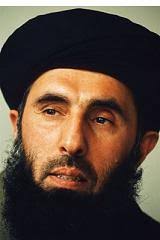
Gulbadin Hekmatyar

Gulbadin Hekmatyar, Fugitive Chief of Hizb-e-Islami in Afghanistan: 'Iran Helped America in Capturing Afghanistan and Iraq'; 'Iran is Ready for Friendship with All Communists, Hindus, Christians, and Any Other Enemy of Islam Against Sunni Muslims'; 'I Hope Not to Take Political Asylum in Saudi Arabia or Any Other Country'

Gulbadin Hekmatyar, the leader of Hizb-e-Islami in Afghanistan, recently gave an interview to the Pashtu-language Afghan website Benawa.com. Hizb-e-Islami is one of the key militant organizations in Afghanistan.

Recently, officials from the Hizb-e-Islami as well as from Afghan and U.S. governments have held secret talks aimed at brokering peace in Afghanistan. However, such talks have not borne fruit, due to Gulbadin Hekmatyar's key demand that the U.S. first announce a timetable for the withdrawal of U.S. troops from Afghanistan.

Following are some excerpts from the interview, originally published in the Pashtu language:

"As Far as the Mujahideen are Concerned, We Will Not Accept a Solution Which Cannot Guarantee the Foreign Forces' Withdrawal Without Any Condition"

Q: Rumors of talks between your party and the Afghan government have been circulating recently, and your spokesmen have also confirmed that Dr. Ghairat Baheer, Qaribur Rahman Saeed, and Daud Abidi of Hizb-e-Islami are busy with these talks. How much do you confirm these peace talks?

A: "We have no formal talks with the Kabul administration; the released rumors on this issue are not correct. The Kabul administration and their foreign supporters are spreading these rumors for specific aims. None of our officials has said that we are in formal negotiation with the Kabul administration. The Kabul administration doesn't have enough authority and power to do something for the solution of the crisis. If a government cannot prevent the foreigners from committing civilian casualties; if their voice is not being heard by the international forces regarding the civilian casualties, then how would it be able to take decisions about the important issues facing this country? Isn't it very bad to have expectations from such administration?"

Q: Do you think the U.S. will be ready to accept your main demands, such as the withdrawal of foreign forces, or at least drawing a specific timetable for them?

A: "Americans will withdraw from Afghanistan very soon Insha'Allah. They have no other options but to leave. I don't think they would have the patience and ability for long-lasting war, [nor] would they stomach the result of the war. As far as the Mujahideen are concerned, we will not accept a solution which cannot guarantee the foreign forces' withdrawal without any condition."

"Even if the Post of President is Offered to Me, I Would Rather Choose a Night in the Battlefield of Jihad than Being President for 100 Years; I Would Rather Die Than Live Like a Servant"

Q: If you come to Kabul, will you be as the leader of your party and an active member of the Afghan government, or will you gradually be stepping out of politics as the two other jihadi leaders Burhanuddin Rabbani and Abdul Rab Rasool Sayaf have faced? Or would you prefer to participate in peace talks because Hizb-e-Islami is an active political party and a political party wants a complete political share?

A: "In the presence of invaders [Americans], I have no wish to go to Kabul, nor do I want to take part in the puppet government [headed by Afghan President Hamid Karzai]. Even if the post of president is offered to me, I would rather choose a night in the battlefield of jihad than being president for 100 years. I would rather die than live like a servant…"

"Our Main Aim from the Negotiations is the Freedom and Integrity of the Country and the Withdrawal of All Foreign Forces as Soon as Possible... Not Just to Take Part in the Government"

"If the opposite side becomes ready to accept realities, leaves its focus on continuing the war, accepts that Afghanistan is the house of Afghans, and lets them choose a leader for themselves, then in this case we think that negotiation is productive, and we are ready for that. Because our main aim from the negotiation is the freedom and integrity of the country and the withdrawal of all foreign forces as soon as possible. Our aim from the negotiation is not just to take part in the government."

Q: Regarding political share, what would you want from the Kabul administration? Would they agree to give many posts to your party or, as it is rumored, would you be glad just for the post of the foreign ministry and some other posts?

A: "We have no negotiations with the Kabul administration, nor do we expect any positive step from them. And we will not take part in a government which is controlled by foreigners and in which foreign advisors are assigned in their offices and foreign commanders in their front line."

Q: If you become successful in negotiations, what will be the stance of your Mujahideen who are currently fighting against the foreign forces?

A: "Our all loyal brothers [fighters] have one stance in both negotiation and in jihad and resistance."

"If There Are Some Private Meetings, Those Meetings Must Not be Counted as Formal Negotiations; I Want to Reiterate That We Have No Formal Talks with Kabul Officials"

Q: Your spokesmen have confirmed peace talks, and Ghairat Baheer and Qaribur Rahman Saeed had talks with some officials inPakistan and in some other countries. Wwhat do you say?

A: "I heard no such words from any of the two persons, and no peace talks were conducted in Pakistan or in any other country. If there are some private meetings, those meetings must not be counted as formal negotiations. I want to reiterate that we have no formal talks with Kabul officials."

Q: President Hamid Karzai also confirmed these peace talks; he even said already that he will announce his candidacy after the peace talks are successful. So he announced his candidacy for reelection as president a few weeks ago. Doesn't that mean that peace talks are successful?

A: "If Karzai counts his meeting with those Taliban and our party members who are already in Kabul, that's his fault. He just wants to say that in order to earn the support of those people who are tired of war. He wants to show those people that Karzai is trying to end the war. Prove it to me, with which of the oppositions he had talks and has been successful? My party had no such talks, and I am sure that Taliban also have not talked with him. So if Karzai is pointing to Qaseem Fahim and Kareem Khalili [former jihadi leaders and warlords] whom he selected as his running mates in the elections, and both of them have fought against our party, so Karzai's stance means that still he wants the continuation of war."

Q: Isn't Ghairat Baheer's release for this purpose, i.e. to continue the peace talks?

A: "No, that's not true. Baheer spent six years in American jails in Bagram and Guantanamo Bay. He was kept in very small dark rooms no wider than a small table. He saw his face in mirror after six years for the first time. Haji Gul Rahman was also detained with him, and still it's not clear if he has been martyred or is still alive. These people had helped Karzai to get out… of prison…. [Karzai] promised himself that he will release them or quit his presidency - but look, Gul Rahman is still not released, but Karzai is president.

"Anyhow, I repeat my statement that I didn't assign Baheer to participate in peace talks."

Q: What is the role of those members of your party in peace talks who are living in Kabul? It is said that they are still counted as branch of your party and that you guide them directly.

A: "They form two groups from our party in Kabul. One group is loyal to our party, believes in jihad and in the country's freedom. They see the Americans as they did the Russians [in the 1980s, i.e. as invaders], and will not agree to anything less than an Islamic government. But the second group was disloyal and only partial friends; they surrendered to the American Kabul government, they cut off relations with us, but they are few, they are insulted now; even their families don't love them."

Q: The separated branch of Hizb-e-Islami is campaigning for you in Kabul and many of them are candidates for the provincial councils. They are paving the road for your coming to Kabul. Does this move have any link with the recent peace talks?

A: "There are no such negotiations, and their movements have no connection with peace talks, and we did not tell anyone to pave the road for us to go to Kabul. Those who cannot go from one area to another in Kabul without foreigners' permission - how can they pave the road for our coming?"

"I Don't Want a Guarantee for My Head From Anyone Except God; We Decided to Sacrifice Ourselves in the Way of God... This is My Strong Decision - That I Must Be in My Country, Whether I am Alive or Dead; I Don't See Any Brave Country in The World to Give Political Asylum to a Mujahid"

Q: Anyhow, if you join the planned peace talks, Saudi Arabia grants you asylum, and then you come to Kabul, who should guarantee your safety - because this time, no one's safety can be guaranteed?

A: "There is no specific plan for peace talks, and I hope not to take political asylum in Saudi Arabia or any other country. I don't want a guarantee for my head from anyone except God. We decided to sacrifice ourselves in the way of God. This is my strong decision that I have to be in my country whether I am alive or dead. I don't see any brave country in the world to give political asylum to a Mujahid. I am also ashamed for having gone to Iran, God forgive me. I will not repeat such a mistake again, if God is willing.

"Kabul officials are depending on foreigners for their security. Foreign security guards are assigned to their offices and houses. They cannot guarantee the safety of those Afghans living under their authority. Many Afghans are being killed in daily bombardment. So, how can we want the guarantee for our safety from such a government?"

Q: For the time being, a few former members of your party are assigned as ministers in the Hamid Karzai's government, and dozens of others are governors, deputy governors, senators, MPs, and head of many offices. Don't you think it is the clear indirect share in the government which will pave the road for the direct share?

A: "Those who joined the Karzai government were members of our party, but now they are not, because they accepted posts in the Kabul American government. They cannot represent our party directly and will not pave the road for indirect power share. These members are recruited to the government just to weaken our party and to cause confrontations among our groups - but, thanks to God, the enemy has not been successful in absorbing many of our friends and weakening us."

"[Our Key Demands Are:] Inter-Afghan Negotiation; Complete Withdrawal of Foreign Forces; a Perfect and Practical Timetable for Such A Withdrawal; Transition of the Authority to an Interim and Non-coalition Government; Free and Fair Election; Change of These Foreign Forces by Islamic Forces If Necessary For the Security of Other Parties - But These Forces Must not Be From Our Neighboring Countries... [and] Must Not Live in Cities and Must Be Under the Command and Observation of the Interim Government"

Q: One of the main obstacles for peace talks is the presence of foreign forces in Afghanistan. Will you be ready in their presence to join the government? If not, what is the solution? Is it the withdrawal? Is it making a timetable for them? Or is it deployment of alternative Islamic forces from Islamic nations?

A: "The presence of the foreign forces is the main cause of the start and of the continuance of the war. In their presence, we will not join any government. We have a clear draft for the solution of the current crisis of which the main points are: inter-Afghan negotiation, the complete withdrawal of foreign forces, a perfect and practical timetable for such a withdrawal, transition of the authority to an interim and non-coalition [2] government, free and fair election, the change of these foreign forces by Islamic forces if necessary for the security of other parties, but these forces must not be from our neighboring countries. These forces must not live in the cities and must be under the command and observation of the interim government."

Q: There is also some confrontation between you and the Taliban. Neither of you accept each other for leadership; also, you don't have similar ideas about having a government. Don't you think you will fight with each other once again if the situation is changed?

A: "We don't even have the same ideas in many aspects with the Taliban, but we have one idea regarding jihad and withdrawal of foreign forces, and this is a very important point this time. We can reach out to one another if we talk. I have told this to the Taliban as well - let's come together and create one platform, and together fight our enemy."

Q: How do you view Iran's role in Afghanistan, since it has launched an extensive campaign to promote Shi'ite and cultural issues in this country?

A: "Iran is playing a very bad game. They opted for a dangerous policy against Afghanistan. Iran has had a hand in almost all fighting in Afghanistan since the withdrawal of the Russian forces. That time, Iran together with Moscow created the [anti-Taliban] Northern Alliance, to prevent the creation of a Mujahideen government. Russian-made weapons and Afghan currency were coming through Iran from Russia. Iran also helped America in capturing both Afghanistan and Iraq.

"In conclusion, Iran is ready for friendship with all communists, Hindus, Christians, and with any other enemy of Islam against Sunni Muslims."

Q: One thing that I have found in your interviews and speeches is that you are not directly condemning Hamid Karzai, and he is also doing the same. Can you tell me what is the fact behind that?

A: "We have no personal enmity with anyone. Our jihad is for Islam and for fighting only non-Muslim invaders. We focus on the main enemy in the fight, and tell our Mujahideen to expend their strength on the main enemy and not to be busy with others…."


www.benawa.com,


New Detainee Statements Provide More Evidence of CIA Torture Program


CIA Continues To Suppress Information From Detainee Tribunals With Heavy Redactions

FOR IMMEDIATE RELEASE
CONTACT: (212) 549-2666; media@aclu.org

NEW YORK – The CIA today released still-highly redacted documents in which Guantánamo Bay prisoners describe abuse and torture they suffered in CIA custody. The documents were released as part of an American Civil Liberties Union Freedom of Information Act (FOIA) lawsuit seeking uncensored transcripts from Combatant Status Review Tribunals (CSRTs) that determine if prisoners held by the Defense Department at Guantánamo qualify as "enemy combatants." In previously released versions of the documents, the CIA had removed virtually all references to the abuse of prisoners in their custody; the documents released today are still heavily blacked out but include some new information.

"The documents released today provide further evidence of brutal torture and abuse in the CIA's interrogation program and demonstrate beyond doubt that this information has been suppressed solely to avoid embarrassment and growing demands for accountability," said Ben Wizner, a staff attorney with the ACLU National Security Project and lead attorney on the FOIA lawsuit. "There is no legitimate basis for the Obama administration's continued refusal to disclose allegations of detainee abuse, and we will return to court to seek the full release of these documents."

The newly unredacted information includes statements from the CSRTs of former CIA detainees, including Khalid Sheikh Muhammad, Abd Al Rahim Hussein Mohammed Al Nashiri, Abu Zubaydah and Majid Khan, including descriptions of torture and coercion. These statements include:

• Abu Zubaydah: "After months of suffering and torture, physically and mentally, they did not care about my injuries that they inflicted to my eye, to my stomach, to my bladder, and my left thigh and my reproductive organs. They didn't care that I almost died from these injuries. Doctors told me that I nearly died four times." "They say 'this in your diary.' They say 'see you want to make operation against America.' I say no, the idea is different. They say no, torturing, torturing. I say 'okay, I do. I was decide to make operation.'"

• Al Nashiri: "[And, they used to] drown me in water."

• Muhammad: "This is what I understand he [CIA interrogator] told me: you are not American and you are not on American soil.  So you cannot ask about the Constitution."

• Khan: "In the end, any classified information you have is through…agencies who physically and mentally tortured me."

"The information released today sheds some new light on the CIA's torture program, but there are still unanswered questions," said Jameel Jaffer, Director of the ACLU National Security Project. "The Obama administration should make good on its commitment to transparency, stop suppressing information about torture and abuse and hold accountable the officials who put unlawful policies in place."

Attorneys in this case are Wizner and Jaffer of the ACLU National Security Project, Judy Rabinovitz and Amrit Singh of the ACLU Immigrants' Rights Project, and Arthur B. Spitzer of the ACLU of the National Capital Area.

World Agenda: Looking to the future without the West

Russian President President Dmitry Medvedev shakes hands with his Chinese counterpart Hu Jintao

The Russian President Dmitry Medvedev, right, shakes hands with his Chinese counterpart Hu Jintao before a closed meeting of SCO leaders in Yekaterinburg

In the place where Europe slides into Asia, the world without the West is gathering to flex its political and economic muscles.

The Bric nations — Brazil, Russia, India and China — and the members of the Shanghai Co-operation Organisation (SCO) are attending simultaneous summits for the first time. The meetings, in the Russian city of Yekaterinburg, give a glimpse of the globe tilting east and south in coming decades, away from the traditional dominance of the United States and Europe.

For advocates of the inevitable triumph of liberal democracy, this is a depressing prospect. Brazil and India are thriving democracies but the prime characteristic of most of the governments gathered here in the Urals is authoritarian, often of the ugliest variety. Apart from China and Russia, the SCO comprises the former Soviet states of Kazakhstan, Uzbekistan, Tajikistan and Kyrgyzstan. President Ahmadinejad of Iran, busy crushing protest over his “landslide” re-election, has observer status, along with India, Pakistan and Mongolia. President Karzai of Afghanistan will also be present.

Almost half the world’s population is represented by the two organisations and a growing proportion of global GDP. This is the first summit of heads of state of the Bric countries, whose increasing economic clout has merely been dented by the financial crisis compared with the battering endured by the US and the European Union.

If geography largely unites these countries (with the obvious exception of Brazil), it is much harder to say whether they have common agendas. China and Russia certainly regard the SCO as a means to shut the US out of Central Asia, their shared “back yard”, but both are rivals for access to the region’s vast energy resources.

They view the SCO as a potential counterweight to Nato, in political terms at least, but the mechanisms do not exist for a projection of serious co-ordinated military power across the region — even if they could agree on an objective. Russia, which holds the SCO’s rotating presidency, is pressing a security agenda to counter threats from terrorism, particularly Islamic extremism, and drug trafficking from Afghanistan.

The Bric states are determined to break up the cosy club of the G8 economies. Celso Amorim, Brazil’s Foreign Minister, declared the death of the G8 in Paris last week, saying: “It doesn’t represent anything any more.”

Talk of supplanting the dollar as the global reserve currency with regional alternatives such as the Chinese yuan or the Russian rouble is still far from practical. But it is no longer unthinkable, a measure of how much the global architecture is shifting.

Russia craves the restoration of its international status as the dominant power in the former Soviet region and through its leadership with China in the two organisations. The former Communist rivals have never been on better terms, evidenced by booming trade and a state visit to Moscow by President Hu immediately after the two summits.

Whatever the hurdles to co-ordinated action by the countries gathered in Yekaterinburg, the model of authoritarian prosperity espoused by many members of the two blocs is a challenge to Western notions of progress. The US and the EU can only watch, uninvited, from outside as these powers of the non-Western world debate their visions of the political and economic future.

Comments:

Shaleen, to me you hit the problem. This group's only true identity is a reactive one against the "West". While the size of the nations involved means their economies will make them powerful enough to become global leaders, the nature of the regimes offer no true long-term alternatives to lib. dem.

Dave, Beijing, China

Russia and China know NATO remains an expansionist threat and has to be stopped. They know that the Americans and the British are envious of their new-found prosperity. And so they will create alliances of like-minded members to checkmate the US and UK.

Shaleen Mathur, Beijing, China

The point is not that BRIC countries have disputes. It is to leave them for another generation that can deal with them better. In the meantime, they want to become as rich and powerful like before - Russia before 1991, China before 1800 and India prior to 1700 when the Europeans were running riot.

Alka Jayaram, Delhi, India


Iran's aim is to be under the SCO's nuclear umbrella, for this reason Iran have signed away billions of dollars in oil contracts with Russia and China. Their wish is never to be "Iraqed".

jayil, london, uk

No orgnization with dictators in the helm will last long. There are bitter disputes between the member countries of SCO; it can’t match the leadership of NATO or EU. SCO is a grand show for dreamers entertaining the world. 

De Mel, Halifax,